
ExpatAdminHubEuropean expat guide
FR
Menu▾
HomePrivacyCookiesAboutContact
All guidesPreparationHousingFinanceHealthcareWorkFamilyCultureVisas & Residence
ExpatAdminHubEuropean expat guide
HomePrivacyCookiesAboutContact
Categories
All guidesPreparation (checklists, visas, moving)Housing (rentals, utilities, neighborhoods)Finance (banking, taxes, budgeting)Healthcare (insurance, doctors, pharmacies)Work (jobs, contracts, work permits)Family (schools, childcare, family life)Culture (language, customs, integration)Visas & Residence (visa renewals, residence permits, paperwork)
FR

ExpatAdminHub

Practical guides for European expats navigating admin, housing, healthcare, and everyday life abroad.

Navigation

HomeAboutAuthor: Julien MauriceFrance hubSwitzerland hubContactPrivacyTermsSitemap

Stay Updated

1 tip per week, no spam.

© 2026 ExpatAdminHub · European expat guide.
FR

Blog articles

Rent 1.0.10: Free Rent Receipts, Property Photos & a Smarter Start
Housing · 12 August 2026

Rent 1.0.10: Free Rent Receipts, Property Photos & a Smarter Start

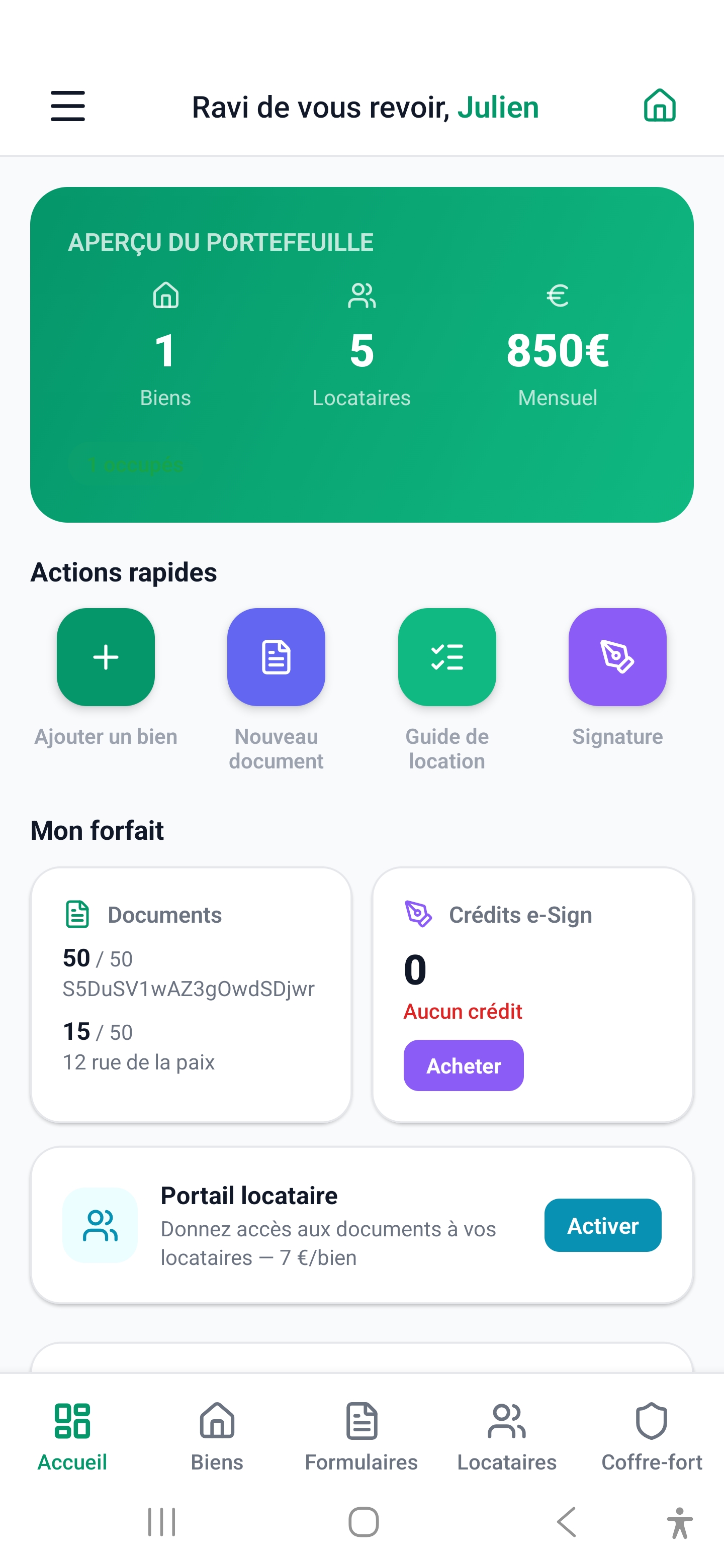
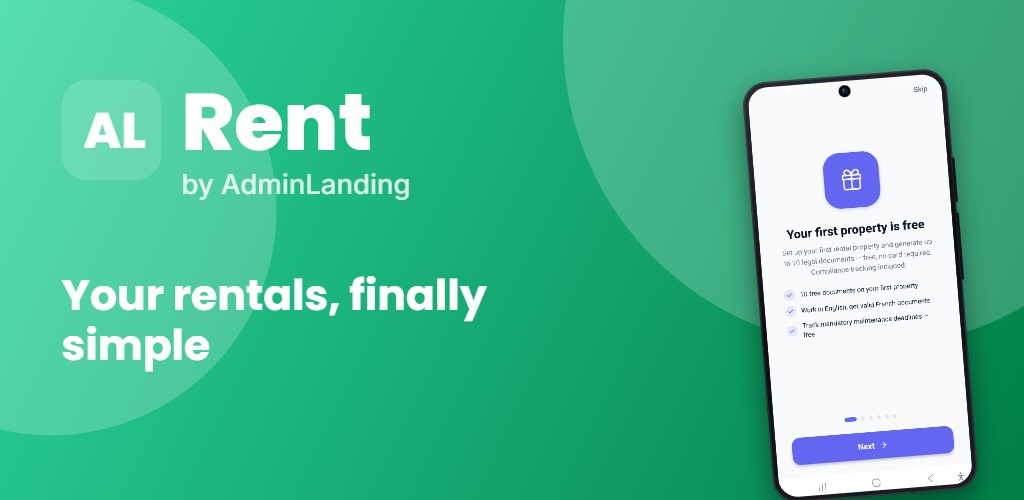
Free rent receipts. That's the headline of version 1.0.10 of Rent — Lease & Short-Term (Rent — Bail & Courte Durée in French), approved on both the App Store and Google Play on 12 August 2026. Every account — free or paid — can now generate up to 20 quittances de loyer a month at no cost: no pack, no subscription, no card. The same free allowance applies on the web at adminlanding.com, because it's account-wide. Around that headline, 1.0.10 adds the quality-of-life layer self-managing landlords actually feel month to month: a photo on every property, a monthly wrap-up card with your year-to-date total once the month's rents are all in, home-screen shortcuts from a long-press on the app icon, and a new illustrated welcome that lets you explore the app — with a real sample rent receipt — before creating an account. Plus the small fixes: an app icon that adapts to iOS 26 dark and tinted modes, a simpler email-verification step at signup, and smoother navigation. Here's what each change does for a landlord managing a French rental — and what it costs (unchanged: first property free, never a subscription).

Read the article
How to Count Your Telework Days as a Frontalier: the 40% Tax Rule vs the 49.9% Social-Security Rule
Work · 05 Aug 2026

How to Count Your Telework Days as a Frontalier: the 40% Tax Rule vs the 49.9% Social-Security Rule

Every France–Switzerland frontalier who works from home now lives with two numbers: 40% and 49.9%. They look interchangeable. They are not. The 40% ceiling comes from the Franco-Swiss tax avenant signed on 27 June 2023 and decides which country taxes your salary from 1 January 2026. The 49.9% ceiling comes from the EU/EFTA social-security framework agreement in force since 1 July 2023 and decides which country's social system you contribute to. Two legal instruments, two reference bases, two sets of consequences — and one shared practical problem: you can only show you are under either line if you actually count your days. This guide is the counting how-to: what goes into each count, how mission days are treated, and a simple monthly method that holds up if anyone asks. It is general information drawn from official French, Swiss and EU sources — not personalised tax or legal advice — and for anything specific to your canton or contract it points you to the competent bodies.

Read the article
Renting Out Your French Property in 2026: The Rules That Changed (Le Meur, DPE, Registry)
Housing · 26 Jul 2026

Renting Out Your French Property in 2026: The Rules That Changed (Le Meur, DPE, Registry)

If you own a French property and rent it out — or planned to start this summer — three sets of rules moved under your feet, and July 2026 is when they all become visible at once. The loi Le Meur tax split showed up for the first time in this spring's income declaration (it applies to 2025 income). The national registration teleservice for short-term lets came into force on 20 May 2026. And the DPE letting-ban calendar keeps tightening, now reaching tourist rentals too. This guide walks a non-resident or expat owner through what actually changed, what it costs to ignore, and what to check before the next tenant or guest arrives. It is general information, not legal or tax advice.


Read the article
French Rental Notice Period for Expats: 1 or 3 Months? The 2026 Rules
Housing · 17 Jul 2026

French Rental Notice Period for Expats: 1 or 3 Months? The 2026 Rules

You've found a new flat, accepted a job in another city, or you're leaving France altogether — and now you need to give notice on your French rental. How long is the préavis? The honest answer is "it depends, precisely": three months by default for an unfurnished lease, one month for a furnished one, and one month for an unfurnished lease if your commune or your personal situation qualifies — under conditions most blog posts get subtly wrong. Get the reduced notice wrong and you owe up to two extra months of rent; get the delivery wrong and the clock never starts at all. This guide walks through the 2026 rules under art. 15 of loi n°89-462 as an expat tenant actually experiences them: which notice applies, the zone tendue list subtlety that trips up even French sites, when the countdown really begins, the exact end-date arithmetic, and how to claim the one-month notice without accidentally forfeiting it. This is general information, not personalised legal advice — verify your own case against the official sources linked throughout.

Read the article
Teleworking rules for France–Switzerland cross-border workers: the 40% telework tax agreement
Work · 07 Jul 2026

Teleworking rules for France–Switzerland cross-border workers: the 40% telework tax agreement

If you live in France and work for a Swiss employer, the days you spend working from your kitchen table are no longer a legal grey zone. Since 1 January 2026 a permanent framework governs how much you can telework from France before your tax situation moves. The headline number is 40%: up to 40% of your annual working time can be performed as telework from your home in France without changing the country that taxes your salary or costing you your frontalier status. This guide explains the 40% tax rule from the avenant signed on 27 June 2023 (published in France by [décret n° 2025-838](https://www.legifrance.gouv.fr/jorf/id/JORFTEXT000052129841)), the separate 49.9% social-security threshold that people constantly confuse with it, what happens if you cross either line, the new employer reporting duties, and how to plan a realistic telework week. Figures and dates are drawn from official French and Swiss sources — this is information, not personalised tax advice, so verify your own case before acting.

Read the article
Family Allowances for France-Switzerland Cross-Border Workers: Swiss Allocations, the French Differential and CAF
Work · 07 Jul 2026

Family Allowances for France-Switzerland Cross-Border Workers: Swiss Allocations, the French Differential and CAF

If you live in France and work in Switzerland, your children's family allowances are governed not by one country but by a European coordination rule that decides who pays first and who tops up. The result surprises many frontaliers: Swiss allowances are usually higher than French ones, so the money often flows the opposite way to what people expect. This guide explains the priority rule under [Article 68 of Regulation (EC) No 883/2004](https://www.cleiss.fr/docs/textes/883-04/t3-8.html), the Swiss allowance amounts canton by canton, when the French complément différentiel is actually paid by the CAF, what happens when both parents work in different countries, and the exact paperwork — your Swiss employer's caisse plus the CAF and the E411 form. Figures are 2026 values; treat them as information, not personalised advice, and confirm the current amounts with your canton's caisse and your CAF before you rely on them.

Read the article
Unemployment benefits for France–Switzerland cross-border workers: who pays and how much
Work · 07 Jul 2026

Unemployment benefits for France–Switzerland cross-border workers: who pays and how much

When a France-resident cross-border worker loses a job in Switzerland, the first question is rarely emotional — it is administrative: who pays my unemployment, Switzerland or France? The Swiss salary was high, the contributions went to a Swiss fund, yet for a genuine daily commuter the answer is France. That rule flows from [EU Regulation (EC) No 883/2004](https://www.cleiss.fr/docs/textes/883-04/t3-6.html), Article 65, which sends a wholly unemployed frontier worker to the unemployment system of the country of residence. This guide walks the whole path: why France pays, the make-or-break line between full and partial unemployment, how to register with France Travail and obtain the Swiss PD U1 attestation, how your former Swiss salary becomes a French benefit (and where the ceiling bites), the 3-to-5-month reimbursement Switzerland owes France, and the 2026 reform that could shift the bill to the country of work. Every figure below is information, not personalised advice — verify the current numbers at the official source before acting.

Read the article
Quasi-resident tax status for France-Switzerland cross-border workers: who benefits and how to claim
Work · 07 Jul 2026

Quasi-resident tax status for France-Switzerland cross-border workers: who benefits and how to claim

Every year, tens of thousands of French residents who work in Geneva or Vaud watch a flat impôt à la source (withholding tax) come off their Swiss payslip, with none of the real deductions a Swiss resident enjoys. The quasi-resident status (statut de quasi-résident) is the legal route that closes that gap: it lets a non-resident who earns almost all of their income in Switzerland be taxed like an ordinary resident, deducting pension buy-ins, childcare, alimony and more. It is not automatic, it must be requested every year by 31 March, and, crucially, it does not help everyone. This guide decodes the 90% rule that gates eligibility, the deductions a taxation ordinaire ultérieure (TOU) unlocks, why Geneva and Vaud frontaliers are not in the same boat, and how to file with the AFC or ACI. Start from the official [impots.gouv.fr frontalier pages](https://www.impots.gouv.fr/international-particulier/salaries-en-suisse); this is information, not personalised advice, so verify every figure at the source before acting.

Read the article
Ending a French Tenancy as a Landlord: Congé for Sale, Personal Use (Reprise), or Legitimate Cause
Housing · 07 Jul 2026

Ending a French Tenancy as a Landlord: Congé for Sale, Personal Use (Reprise), or Legitimate Cause

Ending a tenancy in France is not something a landlord can do freely. Unlike in many countries, French law lets an owner reclaim a rented home only at the natural term of the lease, and only for three tightly defined reasons: to sell it (congé pour vente), to move in or house a close relative (congé pour reprise), or for a legitimate and serious cause (motif légitime et sérieux), such as a tenant's repeated breaches. Miss the notice period, use the wrong wording, or pick a ground you cannot justify, and the congé is void — the lease simply renews for another term. This guide covers the rules for unfurnished and furnished lets under the [loi n°89-462 of 6 July 1989](https://www.legifrance.gouv.fr/loda/id/JORFTEXT000000509310), the six- and three-month notice windows, the exact content a valid congé must contain, the tenant's right of first refusal on a sale, and the extra protection the law gives elderly and low-income tenants. This is general information, not personalised legal advice — verify current figures at the official source before acting.

Read the article
Recoverable rental charges (charges récupérables) in France: what a landlord can bill the tenant
Housing · 07 Jul 2026

Recoverable rental charges (charges récupérables) in France: what a landlord can bill the tenant

If you rent out a home in France, you cannot bill your tenant for whatever you like. The law draws a hard line between the rent — which you set freely, subject to rent-control zones — and the charges récupérables, the running costs of the building you are allowed to pass on. That list is closed: it was fixed by decree in 1987, and only what appears on it can be recovered. Get it wrong and a tenant can reclaim years of overcharges. This guide explains, for landlords and tenants alike, exactly what is recoverable, how the yearly régularisation works, your right to see the invoices behind the numbers, the three-year window that limits claims in both directions, and why a furnished (meublé) or mobility lease follows different rules. Figures and references are drawn from [service-public.fr](https://www.service-public.gouv.fr/particuliers/vosdroits/F947) and the underlying legal texts. Treat this as information, not personalised advice — verify any figure against the source before acting.

Read the article
IRL Rent Revision in France: When and How a Landlord Can Raise the Rent (and the F/G Energy Freeze)
Housing · 07 Jul 2026

IRL Rent Revision in France: When and How a Landlord Can Raise the Rent (and the F/G Energy Freeze)

Revising a rent in France looks simple — apply the IRL index once a year — but the rules around it trip up landlords constantly. Miss the one-year window and the increase is gone for good. Pick the wrong reference quarter and your tenant can contest it. And if the property is a DPE-rated F or G "passoire thermique", the rent is frozen outright, whatever the index says. This guide explains, with the current 2026 figures, when a landlord may legally raise a residential rent, how to calculate the increase to the cent, and where the energy freeze and rent-control zones override the index. It is grounded in article 17-1 of the [loi n°89-462 of 6 July 1989](https://www.service-public.gouv.fr/particuliers/vosdroits/F1311?lang=fr) and the loi Climat et Résilience, with links to the official texts throughout. Read it before you send a revision notice — a mistake here usually costs you the whole year's increase.

Read the article
Security deposit (dépôt de garantie) for French rentals: landlord rules, deductions, return deadlines and disputes
Housing · 07 Jul 2026

Security deposit (dépôt de garantie) for French rentals: landlord rules, deductions, return deadlines and disputes

Few moments in a tenancy generate as much friction as the day the keys come back and the tenant asks for their deposit. In France the dépôt de garantie is tightly regulated: how much you may hold, what you may deduct, and — crucially — how fast you must return it are all fixed by statute, not by the lease. Get the deadline or the paperwork wrong and you don't merely refund the money; you can owe a legal penalty on top. This guide is written for landlords who want deductions that are lawful and defensible. It covers the legal cap, the make-or-break role of the état des lieux, the one- versus two-month return clock, which deductions actually hold up, the special copropriété rule for service charges, the late-return penalty, and what happens when a tenant contests. The framework comes from [loi n°89-462 du 6 juillet 1989 (art. 22), summarised on service-public.fr](https://www.service-public.gouv.fr/particuliers/vosdroits/F31269). Treat this as information, not personalised legal advice — verify any figure at the official source before you act.

Read the article
Short-Term Rental in France 2026: Meublé de Tourisme Obligations for Hosts
Housing · 27 Jun 2026

Short-Term Rental in France 2026: Meublé de Tourisme Obligations for Hosts

Letting a furnished place on Airbnb, Booking or directly as a meublé de tourisme in France is no longer a grey-area side hustle — since the loi Le Meur (law no. 2024-1039 of 19 November 2024) it sits inside a tightening compliance frame: a registration number, a night cap on your primary residence, an energy-performance floor, a SIRET, the right micro-BIC bracket, and the taxe de séjour. Get one of those wrong and you risk a fine, a delisting, or a requalified tax position. This guide lays out, in plain English, exactly which obligations apply to a short-term host in 2026, where the rules changed, and how to check your own situation before your next booking. It is written for the individual host — an expat renting a second flat, a primary-residence owner letting a spare room or the whole place while away — not for professional operators or hotels. It is general information, not legal or tax advice.

Read the article
Tenant Rights in France: Deposit, Repairs & the Written Proof That Wins Disputes
Housing · 08 Jun 2026

Tenant Rights in France: Deposit, Repairs & the Written Proof That Wins Disputes

If you rent in France, three searches probably brought you here: "landlord won't return deposit France", "how to force my landlord to do repairs", or "my landlord is ignoring my move-out notice." These are the most common — and most stressful — tenancy disputes, and they all share one quiet truth: the tenant who has a dated, written, provable record almost always wins. French rental law (the Loi n°89-462 du 6 juillet 1989) is genuinely protective of tenants, but the law only helps you if you can prove what happened and when. As a non-French-speaking expat, that paper trail matters even more — a clear, traceable record of every request closes the door on "I never received that" and "you never asked." This guide walks through getting your dépôt de garantie back, forcing repairs your landlord is dodging, giving notice correctly, and using the état des lieux as evidence — and shows the simplest way to keep all of it in one provable place.

Read the article
Net Frontalier: The Free App That Finally Tells You Your Real Swiss Net Salary
Work · 08 Jun 2026

Net Frontalier: The Free App That Finally Tells You Your Real Swiss Net Salary

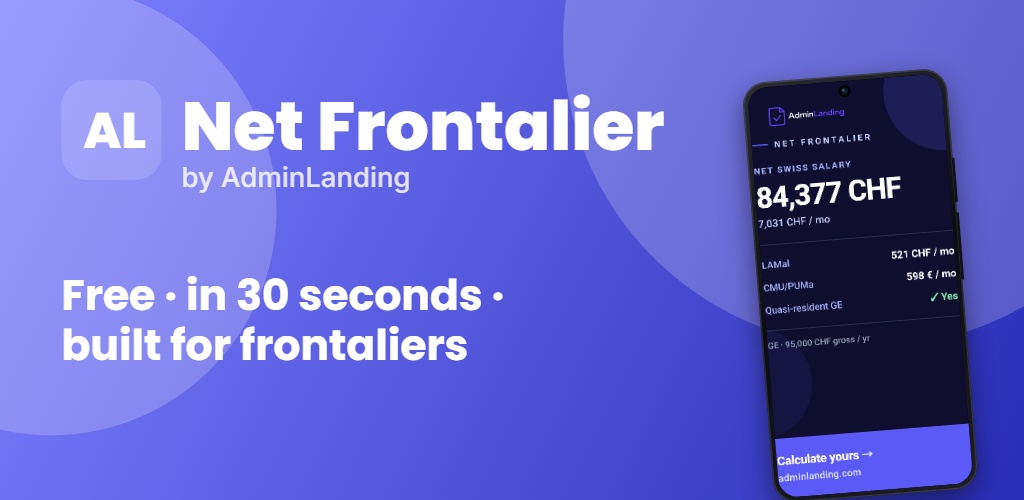
You signed a Swiss contract with a gross salary in CHF, you live in France, and somewhere in the first three months you are supposed to make a permanent health-insurance choice between LAMal and CMU — in French, against a clock you barely understand. The single number nobody gives you is the one that matters: what actually lands in your account each month, and whether LAMal or CMU is cheaper for you. Net Frontalier is a free, anonymous, bilingual app that answers exactly that. Here is what it does, what it honestly does not do, and how to use it before your droit d'option deadline runs out.

Read the article
Renewing Your Post-Brexit WARP Carte de Séjour in France: The 2026 Guide for UK Nationals
Visas & Residence · 08 Jun 2026

Renewing Your Post-Brexit WARP Carte de Séjour in France: The 2026 Guide for UK Nationals

To renew your Brexit WARP carte de séjour in France, apply through your préfecture — online via the ANEF portal where available — starting about two months before it expires. Renewal is free, with no language test and no income requirement. A récépissé keeps you legal while you wait. Most renewals now produce a 10-year card.

Read the article
Non-Resident Landlord French Rental Tax: The 2026 Declaration Guide (2044 / 2042)
Housing · 15 May 2026

Non-Resident Landlord French Rental Tax: The 2026 Declaration Guide (2044 / 2042)

If you live abroad and rent out a property in France, France taxes that rental income — wherever you are tax-resident. The rules that trip up non-resident landlords are specific: which form to file, the 20% minimum rate, the social-levy rate that depends on your health-insurance country, and the tax treaty that stops you being taxed twice. This guide walks through the 2026 declaration end to end, for unfurnished rentals taxed as revenus fonciers. (Furnished rentals follow the separate [LMNP/BIC rules](/en/blog/2026-05-13-lmnp-furnished-rental-tax-micro-bic-vs-reel-guide).)

Read the article
LMNP Furnished Rental Tax 2026: Micro-BIC vs Régime Réel Explained
Housing · 13 May 2026

LMNP Furnished Rental Tax 2026: Micro-BIC vs Régime Réel Explained

Rent out a furnished property in France and your income is not revenus fonciers — it is BIC (industrial and commercial profit), under the LMNP regime. That single difference changes everything: the allowances, the ability to deduct depreciation, and even how your eventual sale is taxed after the 2025 reform. Here is how LMNP works in 2026, the micro-BIC vs régime réel choice that decides your tax bill, and the recent rule changes every furnished landlord should know.

Read the article
Best Rental Management Apps for French Landlords in 2026
Housing · 11 May 2026

Best Rental Management Apps for French Landlords in 2026

If you rent out property in France in 2026, the choice of rental-management software is no longer between spreadsheet and agency. Six SaaS products now hold the bulk of the French independent-landlord market — Rentila (≈50,000 landlords), BailFacile, GérerSeul, Hestia Software, Smartloc and Smovin — alongside Rent — Lease & Short-Term, which is native on both Android and iOS, bilingual FR/EN, and — new in 2026 — covers both long-term leases and short-term / meublé de tourisme letting, with a per-property compliance check built in. They differ on what they treat as the unit of work (the property, the lease, the document, the calendar). They differ on language (most are French-only). They differ on what they ship for the tenant side (Rentila, BailFacile and Hestia offer a web tenant portal; others rely on email PDFs). This guide compares the seven that matter, applied to the situation that defines this audience: an expat or non-resident landlord with one to five properties who needs ALUR-compliant paperwork done at distance without paying 6–10% to a mandataire de gestion.

Read the article
Furnished or Unfurnished? The Tax & Lease Decision for Foreign French Property Owners (2026)
Housing · 04 May 2026

Furnished or Unfurnished? The Tax & Lease Decision for Foreign French Property Owners (2026)

Most foreign owners of French rental property face the furnished-versus-unfurnished question once and resolve it from intuition: furnished feels easier ("I can keep my own things in there"), unfurnished feels more committed. The tax and lease consequences of that intuition are larger than most owners realise, and they cut in opposite directions. Furnished sits under the BIC regime (Bénéfices Industriels et Commerciaux) with the LMNP statute — a commercial-income tax frame that allows building amortissement large enough to drive taxable rental income close to zero in the early years. Unfurnished sits under revenus fonciers with simpler accounting but no amortissement, and a 3-year lease with a more stable tenant. The choice is irreversible only in one direction (opting out of micro-foncier into régime réel binds you for 3 years; the reverse is automatic). This guide walks through the tax math, the lease-duration trade-off and the operational footprint each path produces, framed for foreign owners specifically — where the choice is made remotely, often without a French accountant, and where the wrong default can cost meaningful tax efficiency every year for the life of the lease.

Read the article
Managing a French Rental Property from Abroad: Mandataire vs DIY in 2026
Housing · 03 May 2026

Managing a French Rental Property from Abroad: Mandataire vs DIY in 2026

If you own a French rental property and don't live in France, every operational decision splits two ways: hire a mandataire de gestion (a regulated French property manager) and pay a percentage of every month's rent for the rest of the lease, or run the property yourself from another country and design around the time-zone, language and signature constraints that come with it. Both work in 2026 — French law has become materially friendlier to the at-distance landlord since the eIDAS regulation (EU 910/2014) made qualified electronic signatures legally equivalent to wet ink, since the lettre recommandée électronique (Décret n° 2018-347 of 9 May 2018) replaced the post-office trip for most legal notices, and since the digital lease and digital état des lieux became routine practice. This guide compares the two paths, walks through the legal infrastructure that makes DIY feasible, and shows where the work actually happens day-to-day for non-resident landlords.

Read the article
Becoming a French Landlord as a Non-Resident: First-Year Tax & Admin Setup (2026)
Housing · 02 May 2026

Becoming a French Landlord as a Non-Resident: First-Year Tax & Admin Setup (2026)

Owning a rental property in France while living outside it puts you in the most-misunderstood corner of the [French tax system](/en/blog/2026-04-19-declaration-revenus-france-expats-guide-2026). The rental income is French-source, which means France taxes it regardless of where you live (Article 164 B of the Code Général des Impôts). But you are a non-résident fiscal — and that single status changes which tax office you write to, which forms you file, the minimum rate applied to your French income, whether 17.2% in social contributions also apply, and whether you need a fiscal representative. This guide walks foreign-national French property owners through the first-year setup: who you are in the eyes of the FISC, where to register, what you'll file every May, and the specific traps that trip up first-time non-resident landlords. Sources at every step are official: legifrance, impots.gouv.fr, the Bulletin Officiel des Finances Publiques (BOFiP), and ANIL.

Read the article
CAF Registration in France: Complete Guide to Housing Aid (APL, ALF, ALS) for Expats (2026)
Housing · 26 Apr 2026

CAF Registration in France: Complete Guide to Housing Aid (APL, ALF, ALS) for Expats (2026)

The Caisse d'Allocations Familiales (CAF) administers three housing-aid schemes — APL (aide personnalisée au logement), ALF (allocation de logement familiale), and ALS (allocation de logement sociale) — covering roughly 6 million households in France, with eligibility now based on income calculated on a rolling 12-month window since the 2021 reform (revenus contemporains). For an expat just arrived, the picture rarely starts that clean. Which of the three aids applies depends on whether your dwelling is conventionné with the State, on your family composition, and on whether anyone else in the household qualifies for family benefits. Eligibility also requires a stable and regular residence in France, a valid titre de séjour for non-EU nationals, a décent dwelling that meets minimum surface and energy criteria, and an online dossier on caf.fr. The first payment lands roughly 6 to 8 weeks after the application is validated — and only after a one-month carence during which no aid is paid. This guide walks through which aid applies to your situation, what documents CAF actually asks for, how the espace allocataire works, and the mistakes that delay or kill applications. Read this before signing the lease whenever possible.

Read the article
How to Get a Carte Vitale in France as a Foreigner: CPAM & Ameli Registration Guide (2026)
Healthcare · 25 Apr 2026

How to Get a Carte Vitale in France as a Foreigner: CPAM & Ameli Registration Guide (2026)

Any person stably and regularly residing in France for at least 3 months is entitled to French public health insurance under the Protection Universelle Maladie (PUMA), codified in Article L160-1 of the Code de la Sécurité Sociale. That sentence sounds simple — and yet, every single week, expats arriving in Paris, Lyon, Lille or Annemasse get stuck in the same loop: which CPAM should I apply to, which form opens my rights, what counts as a justificatif de domicile, why has my dossier been silent for ten weeks, when does the carte vitale actually arrive? PUMA replaced [CMU](/en/blog/2026-03-28-lamal-vs-cmu-health-insurance-cross-border-worker) in 2016, the student régime étudiant disappeared in 2019, the espace assuré on ameli.fr was redesigned in 2024, and not a single official page is written for someone whose first language isn't French. This guide walks through every stage of the CPAM registration in plain English: who qualifies and through which scheme, the exact list of supporting documents, how to fill form S1106, the carte vitale timeline, the médecin traitant declaration, and the five mistakes that delay coverage by months. By the end, you'll know exactly what to send, where, and what to expect back.

Read the article
État des Lieux in France: Complete Guide to Move-In and Move-Out Property Inspections (2026)
Housing · 19 Apr 2026

État des Lieux in France: Complete Guide to Move-In and Move-Out Property Inspections (2026)

The état des lieux is the single most important — and most frequently skipped — document in a French tenancy. Far from a formality, it is a legally mandatory inventory under the Loi ALUR (Loi n°2014-366 du 24 mars 2014) and Article 3-2 of the Loi n°89-462 du 6 juillet 1989. Skipped, rushed, or badly drafted, it is the single clearest predictor of a dispute at the end of the lease: tenants lose their dépôt de garantie because they cannot prove the property's initial condition; landlords lose their right to any deduction because they cannot prove deterioration. Two inspections are required — an état des lieux d'entrée at move-in and an état des lieux de sortie at move-out — and both must be signed by both parties, or carried out by a huissier de justice if either refuses. This guide walks through the legal framework, the mandatory contents, how to conduct each inspection properly, and what to do when things go wrong.

Read the article
French Tax Declaration 2026: Step-by-Step Guide for Expats (Déclaration de Revenus)
Finance · 19 Apr 2026

French Tax Declaration 2026: Step-by-Step Guide for Expats (Déclaration de Revenus)

Tax season is live in France right now. Online filing on impots.gouv.fr opened on 9 April 2026, and the first deadlines hit in just over a month — paper returns by 19 May, and online returns staggered from 21 May to 4 June depending on your département. For expats, this is never a routine exercise: beyond the main formulaire 2042, you likely need the 2047 for foreign income, the 3916 for foreign bank accounts (€1,500 fine per missed account), and critical boxes like 1AF/1BF for foreign salary and 8TK for the credit d'impôt that prevents double taxation. First-year filers face the steepest learning curve because the tax office sends no reminder email if you haven't yet created an espace particulier. This guide walks through every stage — who must file, which forms apply, how to navigate impots.gouv.fr screen by screen, and how to avoid the five mistakes that cost expats hundreds of euros every year. If you've been putting this off, now is the week to act.

Read the article
Quittance de Loyer: Free Template & Legal Requirements in France (2026)
Housing · 11 Apr 2026

Quittance de Loyer: Free Template & Legal Requirements in France (2026)

The quittance de loyer (rent receipt) is one of the most important recurring documents in a French tenancy. Far from a mere courtesy, it is a legal obligation for landlords under Article 21 of the Loi n°89-462 du 6 juillet 1989. For tenants — especially expats — it serves as the primary justificatif de domicile (proof of address) for virtually every administrative procedure in France: opening a bank account, applying for a titre de séjour, registering with the [CAF](/en/blog/2026-04-26-caf-registration-housing-aid-france-expats), or enrolling children in school. This guide covers everything landlords and tenants need to know about quittances in 2026, including legal requirements, required content, electronic delivery rules, and common pitfalls.

Read the article
Swiss Second Pillar (LPP/BVG): Complete Retirement Guide for Cross-Border Workers
Finance · 03 Apr 2026

Swiss Second Pillar (LPP/BVG): Complete Retirement Guide for Cross-Border Workers

If you work in Switzerland as a frontalier, a significant portion of your salary is automatically invested in the second pillar — Switzerland's occupational pension system (LPP/BVG). Understanding how it works, how much you contribute, and what happens when you leave Switzerland or retire is essential for long-term financial planning. Yet most cross-border workers barely know what is in their pension account.

Read the article
French Tax System for Expats: First Year, Partial Year, and Cross-Border Income Explained
Finance · 02 Apr 2026

French Tax System for Expats: First Year, Partial Year, and Cross-Border Income Explained

Arriving in France means entering one of Europe's most complex tax systems. Between the prélèvement à la source, the déclaration de revenus, the avis d'imposition, and special rules for partial-year and cross-border income, most expats overpay or miss deductions in their first years. This guide breaks down exactly how French taxation works for newcomers — with the legal references to back it up.

Read the article
French Bail (Lease Contract): Complete Legal Guide for Tenants and Landlords
Housing · 01 Apr 2026

French Bail (Lease Contract): Complete Legal Guide for Tenants and Landlords

The bail de location is the cornerstone of every rental relationship in France. Governed primarily by the Loi n°89-462 du 6 juillet 1989 (for unfurnished) and the Loi ALUR of 2014, it defines the rights and obligations of both landlord and tenant for the entire duration of the tenancy. Whether you are renting your first apartment in France or letting a property, this guide covers every clause that matters.

Read the article
Permit G Switzerland: The Complete Guide for Cross-Border Workers (Frontaliers)
Work · 31 Mar 2026

Permit G Switzerland: The Complete Guide for Cross-Border Workers (Frontaliers)

The Permit G (Grenzgängerbewilligung / permis frontalier) is the residence document that allows you to live in an EU/EFTA country and work in Switzerland. With over 400,000 frontaliers crossing into Switzerland daily (OFS, 2025), it is one of the most common — and most misunderstood — work permits in Europe. Here is everything you need to know.

Read the article
Post-Brexit Carte de Séjour: Complete Step-by-Step Guide for UK Nationals in France
Visas & Residence · 30 Mar 2026

Post-Brexit Carte de Séjour: Complete Step-by-Step Guide for UK Nationals in France

Since Brexit took full effect on 1 January 2021, UK nationals are no longer EU citizens and need a carte de séjour (residence permit) to live in France. Whether you were already resident before Brexit or are arriving now, this guide covers every step — from eligibility to the préfecture appointment.

Read the article
Quittance de Loyer: Landlord Obligations and How to Generate Rent Receipts in France
Housing · 29 Mar 2026

Quittance de Loyer: Landlord Obligations and How to Generate Rent Receipts in France

In France, landlords are legally required to provide a [quittance de loyer](/en/blog/2026-04-11-quittance-de-loyer-free-template-legal-guide) (rent receipt) to any tenant who requests one. Whether you are a landlord managing a property or an expat tenant who needs proof of rent payment, understanding this obligation is essential — non-compliance can have legal consequences.

Read the article
LAMal vs CMU: How to Choose Health Insurance as a Cross-Border Worker in Switzerland
Healthcare · 28 Mar 2026

LAMal vs CMU: How to Choose Health Insurance as a Cross-Border Worker in Switzerland

If you live in France and work in Switzerland, you must choose between the Swiss LAMal system and the French CMU (now PUMa) within three months of starting work. This decision has long-term financial and practical consequences — here is what you need to know to make the right call.

Read the article
Why Administrative Systems Never Adapt to Expat Life — Even When You Wait
Visas & Residence · 14 Jan 2026

Why Administrative Systems Never Adapt to Expat Life — Even When You Wait

One of the most persistent beliefs among expats is that time will solve administrative problems. That if you wait long enough, systems will update, adapt, or correct themselves. In reality, waiting often makes things worse. Administrative systems do not observe your life and adjust. They apply static logic to declared data. This article explains why systems never adapt automatically to expat life, why waiting is misinterpreted as confirmation, and why clarity only comes when alignment is made explicit.

Read the article
Your Health Insurance Stopped 6 Months Ago (You Just Don't Know It Yet)
Healthcare · 08 Jan 2026

Your Health Insurance Stopped 6 Months Ago (You Just Don't Know It Yet)

Your health coverage didn't end the day you moved. It ended quietly. Months ago. Everything looked fine. Your card was still in your wallet. No warnings arrived. Then came the doctor visit, the pharmacy bill, the reimbursement refusal. That's when you discovered the truth: you've been uninsured for months. This isn't negligence. It's how European health systems work. This article shows why coverage gaps hit thousands of expats, why no one warns you, and how you end up uninsured without ever deciding to be.

Read the article
Wake Up to a Frozen Bank Account: The 8-Month Expat Trap Nobody Warns You About
Finance · 07 Jan 2026

Wake Up to a Frozen Bank Account: The 8-Month Expat Trap Nobody Warns You About

You moved 8 months ago. Everything seemed fine. Then this morning: declined card. Blocked transfer. Account closure notice. Nothing dramatic happened yesterday. The problem was building in silence: • Your address change wasn't fully processed • Cross-border transactions triggered internal alerts • Tax and visa data created residency doubts European banks don't warn you. They watch. They wait. Then they act—suddenly. This article shows why thousands of expats lose banking access months after moving, how your residency and tax data are cross-checked right now, and what you can do tonight to prevent a freeze.

Read the article
January 1st Changed Your Tax Rate (Your Payslip Won't Tell You Until February)
Finance · 06 Jan 2026

January 1st Changed Your Tax Rate (Your Payslip Won't Tell You Until February)

January looks calm. No forms. No deadlines. No letters. But behind the scenes, 12 tax parameters just reset. Your residency status. Your contribution class. Your withholding rate. All recalculated—silently. You won't see it until February's payslip. By then, the assumptions are locked for the year. This article shows: • What actually resets on January 1st • Why locals barely notice but expats get hit hard • How to catch changes before they lock in You have one narrow window to fix this. It closes fast.

Read the article
Why 'I'll Fix It Next Year' Is the Most Expensive Tax Sentence for Expats
Finance · 31 Dec 2025

Why 'I'll Fix It Next Year' Is the Most Expensive Tax Sentence for Expats

Almost every expat has said it at least once: 'I'll deal with taxes next year.' The sentence feels reasonable, calm, and responsible. In reality, it is one of the most expensive habits in expat life. This article explains why waiting is never neutral in taxation, why timing matters more than effort, and why many expats only realise the cost when it is too late.

Read the article
The Tax Box Expats Tick Without Thinking — And Regret Every Year
Finance · 30 Dec 2025

The Tax Box Expats Tick Without Thinking — And Regret Every Year

Most expats believe tax mistakes come from missing deadlines or forgetting documents. In reality, some of the most expensive mistakes come from something far smaller: a single box ticked on a declaration form. Often pre-filled, poorly explained, and easy to overlook, that box can quietly determine your tax regime for years. This article explains why expats fall into this trap, why regret arrives late, and why undoing the choice is far harder than making it.

Read the article
Why Tax at Source Makes Expats Overpay — And Why It's Rarely Corrected
Finance · 29 Dec 2025

Why Tax at Source Makes Expats Overpay — And Why It's Rarely Corrected

Tax at source was introduced across Europe with a simple promise: remove friction, reduce stress, and make taxation easier for everyone. For many local workers with stable, predictable lives, that promise largely holds true. For expats, however, tax at source often does the opposite. While automatic withholding feels reassuring on the surface, it frequently hides structural inefficiencies that quietly cost money year after year. This article explains why tax at source systematically disadvantages many expats, why the resulting overpayment is so difficult to detect, and why corrections are far rarer than people expect.

Read the article
Renovate Now or Wait? The Energy Renovation Timing Trap Facing European Households
Housing · 28 Dec 2025

Renovate Now or Wait? The Energy Renovation Timing Trap Facing European Households

Across Europe, millions of households are asking the same question: should we renovate now — or wait for better subsidies, clearer rules, or lower prices? This hesitation feels rational. In reality, it often leads to higher costs, missed incentives, and rushed decisions later. This article explains the hidden timing trap behind energy renovation.

Read the article
Why Cross-Border Workers Pay Tax in the Wrong Country — Without Knowing It
Work · 27 Dec 2025

Why Cross-Border Workers Pay Tax in the Wrong Country — Without Knowing It

For many cross-border workers between France and Switzerland, taxes feel deceptively simple. Salary is paid in one country, life happens in another, and deductions appear automatically. Everything looks normal — until one day it doesn’t. Each year, thousands of frontaliers discover they have been paying tax in the wrong country, or in the wrong way, without ever intending to. This article explains why this mistake is so common, why it often goes unnoticed for years, and why correcting it is rarely as easy as people expect.

Read the article
The Tax Mistake Most Expats Only Realise After It's Too Late
Finance · 26 Dec 2025

The Tax Mistake Most Expats Only Realise After It's Too Late

There is one tax mistake that unites expats across Europe. It is not fraud, not negligence, and not ignorance. It happens quietly, month after month, while everything appears to be handled correctly. Most expats only discover it once the year is over - when refunds are limited, deadlines have passed, and the money is already gone. This article explains what that mistake really is, why it happens to competent people, and why Europe's tax systems allow it to repeat year after year.

Read the article
Why So Many Expats Discover in January That They Overpaid Thousands in Taxes — And How It Happens
Finance · 24 Dec 2025

Why So Many Expats Discover in January That They Overpaid Thousands in Taxes — And How It Happens

Every January, the same quiet shock spreads through expat communities across Europe. People open tax summaries, simulation tools, or letters from authorities and realise something unsettling: they paid far more tax than they should have. Not because they broke the law. Not because they earned unexpectedly more. But because of structural misunderstandings that only become visible once the year is over. This discovery often happens too late to fix. This article explains why so many expats overpay taxes, why the realisation almost always comes in January, and how perfectly reasonable decisions throughout the year quietly compound into expensive mistakes.

Read the article
What Really Happens When an Expat Gets Sick in Europe - and isn't Properly Registered
Healthcare · 20 Dec 2025

What Really Happens When an Expat Gets Sick in Europe - and isn't Properly Registered

For many expats, healthcare in Europe is one of the main reasons for moving. Universal coverage, strong public systems, and lower costs than in many other regions create a sense of safety. Yet this confidence hides a dangerous assumption: that being physically present in Europe automatically means being protected. In reality, healthcare access depends on administrative alignment, not geography. When expats fall ill before being properly registered, the experience can be deeply destabilising - financially, emotionally, and legally. This article explains what actually happens when things go wrong, why so many expats are unprepared, and how to avoid learning these lessons the hard way.

Read the article
What No One Tells You About European Visas — And Why Most Expats Misunderstand Them
Visas & Residence · 19 Dec 2025

What No One Tells You About European Visas — And Why Most Expats Misunderstand Them

European visas are often presented as simple gates: you apply, you get approved, you move on with your life. This illusion is responsible for a large share of expat frustration, delayed integration, and unexpected departures. In reality, a visa is not a destination — it is a temporary permission that interacts continuously with healthcare systems, tax authorities, employment law, and social benefits. In 2025, misunderstanding this reality is one of the most common — and costly — expat mistakes. This article explains what visas really are in Europe, why so many people misinterpret them, and how to approach them with clarity rather than false reassurance.

Read the article
Is Europe Becoming Harder for Expats in 2025? The Reality Behind the Headlines
Culture · 18 Dec 2025

Is Europe Becoming Harder for Expats in 2025? The Reality Behind the Headlines

Scroll through expat forums, social media, or headlines in late 2024 and one narrative dominates: Europe is becoming harder for expats. Visas are stricter. Taxes are higher. Bureaucracy is heavier. Benefits are harder to access. Many newcomers arrive already convinced that Europe has closed in on itself. Yet at the same time, millions of expats continue to settle, integrate, and build long-term lives across the continent. So which version is true? In 2025, is Europe genuinely becoming more hostile to expats — or is something more subtle happening beneath the surface?

Read the article
Moving to Europe in 2025? The Ultimate Expat Checklist No One Gives You (But Everyone Needs)
Preparation · 15 Dec 2025

Moving to Europe in 2025? The Ultimate Expat Checklist No One Gives You (But Everyone Needs)

Every year, millions of people move to Europe — and most of them are given the wrong checklist. They are told what to pack, how to book a flight, maybe how to find an apartment. What they are not told is how Europe actually works once you arrive: how deadlines silently start, how administrations interconnect, how one early decision can lock you into years of complications, and how stress accumulates when nothing seems urgent — until everything is. This is the checklist no one gives you, but every successful expat ends up reconstructing the hard way. Updated for 2025, it focuses on what truly matters: administrative sequencing, financial protection, and mental clarity.

Read the article
10 Costly Mistakes Expats in Europe Make in Their First Year — And How to Avoid Them in 2025
Preparation · 14 Dec 2025

10 Costly Mistakes Expats in Europe Make in Their First Year — And How to Avoid Them in 2025

Last month, Sarah from Toronto lost €2,400 in her first six months in Lyon. Not to scams or bad decisions — but to administrative mistakes she didn't even know she was making. She's not alone. In 2025, the average expat loses between €1,800 and €4,200 in their first year through delayed registrations, missed deadlines, overpayments, and rejected applications. The worst part? These mistakes are 100% avoidable — but only if you know what to watch for. European administrative systems are designed for locals, not newcomers. They're fragmented, unforgiving, and full of invisible traps that cost you time, money, and peace of mind. This guide reveals the ten most expensive first-year mistakes expats make in Europe in 2025 — and gives you the exact step-by-step solutions to avoid every single one.

Read the article
Europe’s New Digital Admin Trap: What Happens When Your Entire Life Depends on One App?
Culture · 10 Dec 2025

Europe’s New Digital Admin Trap: What Happens When Your Entire Life Depends on One App?

In 2025, a silent transformation affects every expat in Europe: nearly every task—healthcare, payments, travel, identity verification, reimbursements, job contracts, even crossing borders—now depends on a single app, a central digital portal, or a unified electronic identity. Convenient? Absolutely. But also fragile. What happens if the app goes down, if your ID stops being recognised, or if a country changes its rules overnight? This long-form article explores a trending but underreported issue: the fragility of Europe’s new digital administrative ecosystem, and how expats can protect themselves.

Read the article
Geneva Region 2025: Salaries, Taxes, Housing & Mobility — The New Reality for Expats and Cross-Border Workers
Work · 09 Dec 2025

Geneva Region 2025: Salaries, Taxes, Housing & Mobility — The New Reality for Expats and Cross-Border Workers

227,400 cross-border workers. A record number that captures the spectacular transformation of the Geneva region in 2025. Behind this statistic lies a complex reality: salaries among the highest in Europe, yet record housing pressure. Stricter tax rules, yet unique professional opportunities. Saturated daily mobility, yet constantly improving infrastructure. For the 15,000 expats and new cross-border workers arriving each year, understanding this new landscape is no longer optional. This 3,500-word guide analyzes in depth the sectoral salaries, Franco-Swiss tax mechanisms, housing market reality, mobility strategies, and administrative traps to avoid. With 2025 data, concrete examples, and detailed budgets, this is the only guide you need to succeed in your relocation to the Lake Geneva region.

Read the article
European Housing 2025: Rent Caps, New Tenant Rights & Digital Contracts — The Essential Expat Guide
Housing · 07 Dec 2025

European Housing 2025: Rent Caps, New Tenant Rights & Digital Contracts — The Essential Expat Guide

Europe’s rental market is hitting a historic turning point. With soaring rents, massive post-COVID relocations, remote work shifting demand, and housing shortages in several countries, the EU and national governments have accelerated reforms. The result: 2025 is a decisive year for expats. New rent caps are spreading, tenant rights are expanding, governments are inspecting quality more aggressively, and a silent revolution is underway: the digitalisation of rental contracts. This long-form guide—written for expats navigating unfamiliar systems—explains what’s changing, how to prepare, and how to avoid the administrative traps of renting in a country you’re still learning to decode.

Read the article
EU Banking Shock 2025: New KYC, Account Freezes & Cross-Border Transfers — The Expat Guide
Finance · 05 Dec 2025

EU Banking Shock 2025: New KYC, Account Freezes & Cross-Border Transfers — The Expat Guide

2025 is the year European banks tighten everything. New KYC rules, automatic address checks, temporary account freezes when data does not match, stronger cross-border transfer monitoring and less tolerance for unverified foreign IBANs. Expats are directly affected. This guide explains what is changing, why it is happening now and how to stay safely on the right side of the system.

Read the article
New EU Residence Rules 2025: What’s Really Changing Across Europe (France, Spain, Germany, Belgium)
Visas & Residence · 04 Dec 2025

New EU Residence Rules 2025: What’s Really Changing Across Europe (France, Spain, Germany, Belgium)

2025 is a turning point for expats in Europe. Several countries – France, Spain, Germany, Belgium – are reforming their residence-permit rules at the same time: processing delays, online systems, income requirements, multi-year cards, address checks, proof of means, and stricter rules on time spent outside the EU. This guide breaks down what is actually changing, how to prepare, and how to avoid the early-year administrative traps.

Read the article
2025 Year-End Checklist for Expats in Europe: Visas, Healthcare, Taxes, Banking
Finance · 02 Dec 2025

2025 Year-End Checklist for Expats in Europe: Visas, Healthcare, Taxes, Banking

December is not just about lights and mulled wine. It is also when a lot quietly changes in your expat life: residence permits expiring in spring, health insurance that auto-renews, tax rules shifting for 2026, banks updating their fees. If you ignore it all, you usually pay later in stress or money. This year-end checklist helps you run a quick but serious review of your situation in Europe.

Read the article
Europe’s Expat Banking Shake-Up 2025: What Every Foreigner Must Prepare For
Finance · 30 Nov 2025

Europe’s Expat Banking Shake-Up 2025: What Every Foreigner Must Prepare For

2025 is bringing the biggest banking shift in Europe since SEPA was introduced. New regulations, tighter supervision, account closures, Swiss restrictions, rising fees and the rise of fintechs all collide at the same time. For expats living between countries, this can either be a source of constant friction or a major opportunity. This in-depth guide explains what is really changing, where costs are quietly increasing, how to avoid common traps and how to build a modern banking setup that matches a mobile, international life.

Read the article
France–Switzerland 2024–2025: The Coming Cross-Border Earthquake
Work · 29 Nov 2025

France–Switzerland 2024–2025: The Coming Cross-Border Earthquake

A silent earthquake is reshaping the France–Switzerland relationship. Beyond speeches and press releases, the rules are shifting fast: cross-border taxes, health insurance, banking, work permits, daily commuting. More than 220,000 workers now cross the border, and they sit at the centre of an unprecedented transformation. This investigative-style guide explains what is changing, what may come next, and how to prepare practically for 2025.

Read the article
Europe's Hidden Health Gap: Why Expats Pay More and How to Get the Best Coverage in 2025
Healthcare · 27 Nov 2025

Europe's Hidden Health Gap: Why Expats Pay More and How to Get the Best Coverage in 2025

Across Europe, expats report rising health costs, longer waits and more complex paperwork. In 2025, the continent quietly widens the gap between nationals and newcomers. The good news: this gap is largely administrative and strategic, not medical, and you can close much of it with the right choices.

Read the article
The 2025–2026 Expat Housing Shock: Why Rents Are Surging in Europe — and How to Protect Yourself
Housing · 26 Nov 2025

The 2025–2026 Expat Housing Shock: Why Rents Are Surging in Europe — and How to Protect Yourself

Berlin, Madrid, Lisbon, Paris, Amsterdam… everyone is saying it: rents are out of control. For expats, pressure is even higher with international competition and stricter paperwork. This 2025–2026 guide explains the housing shock — and how to protect yourself instead of being pushed out.

Read the article
Schengen’s Biometric Mega-Rollout: What Every Expat Must Know Before 2026 (EES, ETIAS, Residency Checks)
Visas & Residence · 25 Nov 2025

Schengen’s Biometric Mega-Rollout: What Every Expat Must Know Before 2026 (EES, ETIAS, Residency Checks)

2026 is set to become the biggest shift in European border policy since Schengen. The new Entry/Exit System (EES), followed by the ETIAS travel authorisation, will change how expats, cross-border workers and visitors move across Europe. Photos, fingerprints, automated day tracking and stricter links with residency files mean that your border history will have to match your paperwork.

Read the article
Europe's International School Rush: Admissions, Waitlists, Cost Explosion — The 2025 Truth Guide
Work · 24 Nov 2025

Europe's International School Rush: Admissions, Waitlists, Cost Explosion — The 2025 Truth Guide

Every expat parent feels it now: getting a seat in an international school has become one of the toughest parts of moving to Europe. In 2025, pressure has reached a new level, with long waitlists, rising tuition fees, new admission rules, and fierce competition between expat families, locals, and cross-border workers. This guide explains what is happening, which schools are under the most pressure, and practical strategies to secure a place even in very competitive schools.

Read the article
France–Switzerland 2025: The Coming Cross-Border Earthquake (Taxes, Healthcare, Rail, Jobs, Housing)
Work · 23 Nov 2025

France–Switzerland 2025: The Coming Cross-Border Earthquake (Taxes, Healthcare, Rail, Jobs, Housing)

2025 is shaping up to be the most turbulent year for France–Switzerland cross-border workers in two decades. Pressure on tax treaties, heated [CMU](/en/blog/2026-03-28-lamal-vs-cmu-health-insurance-cross-border-worker) debates, housing inflation on the French side, saturated rail lines, renegotiated health coverage and Swiss employers struggling to hire all at once point to a coming cross-border earthquake. This article explains what is already changing, what could change next, how it may hit your wallet and which strategies can keep you ahead of the curve.

Read the article
EU Banking Shake-Up 2025: New IBAN Rules, SEPA Instant, Hidden Fees and the Best Expat Strategies
Finance · 22 Nov 2025

EU Banking Shake-Up 2025: New IBAN Rules, SEPA Instant, Hidden Fees and the Best Expat Strategies

2025 is a turning point for European banking. Wider deployment of SEPA Instant transfers, stronger rules against IBAN discrimination, rising cross-border fees and the growth of fully online banks mean expats need to rethink their setup. This long-form guide explains what is changing, how it affects you in daily life, and how to avoid losing hundreds of euros a year without even noticing.

Read the article
Best Banking Strategies for Expats 2025: Hidden Fees, IBAN Discrimination, Transfers, SEPA — How to Avoid the Traps
Finance · 21 Nov 2025

Best Banking Strategies for Expats 2025: Hidden Fees, IBAN Discrimination, Transfers, SEPA — How to Avoid the Traps

Opening a bank account abroad should be simple. In 2025, it rarely is. IBAN discrimination still appears despite EU law, SEPA transfers that should be free are charged, hidden FX fees multiply, and some companies refuse payments from specific foreign accounts. This guide explains how to avoid those traps, save hundreds of euros per year and build a resilient banking strategy for your expat life.

Read the article
The End of the Digital Nomad Golden Age: Why the Model Is Slowing in 2025 and How Expats Can Adapt
Work · 18 Nov 2025

The End of the Digital Nomad Golden Age: Why the Model Is Slowing in 2025 and How Expats Can Adapt

For a decade, working from Lisbon, Tbilisi or Tallinn symbolised the modern work dream: freedom, sun, Wi-Fi cafés, borderless living. But in 2025, the trend is reversing. Companies tighten rules, governments reinforce tax controls, and the European Union introduces new labour and social-security obligations. Are we witnessing the end of an era? This guide brings together data, real scenarios, and action plans so you can adjust your expat life instead of being forced to move or change jobs in a rush.

Read the article
Public International Sections in France (2025): British, American, German… Admissions, Curriculum, and Costs
Family · 17 Nov 2025

Public International Sections in France (2025): British, American, German… Admissions, Curriculum, and Costs

Did you know France hosts over 350 public international sections where classes are taught in both French and another language (English, German, Spanish, Italian, Chinese, and more)? For expat families, they’re often the perfect balance: French curriculum, native culture, and free tuition. This 2025 guide explains the British, American, and German tracks, the admission calendar, entrance tests, and real costs.

Read the article
Finding English-Speaking Real-Estate Agents in France (2025): Navigating the Market Like a Pro
Housing · 15 Nov 2025

Finding English-Speaking Real-Estate Agents in France (2025): Navigating the Market Like a Pro

You land in Paris, Lyon, or Nice with one dream: a bright, affordable apartment — and someone who speaks English to guide you. Quickly, you discover the maze: incomplete listings, agencies asking for French guarantors, contracts you can't decode. But there's a method — the one seasoned expats use. In 2025, finding a reliable English-speaking agent has never been easier… if you know where to look and how to negotiate.

Read the article
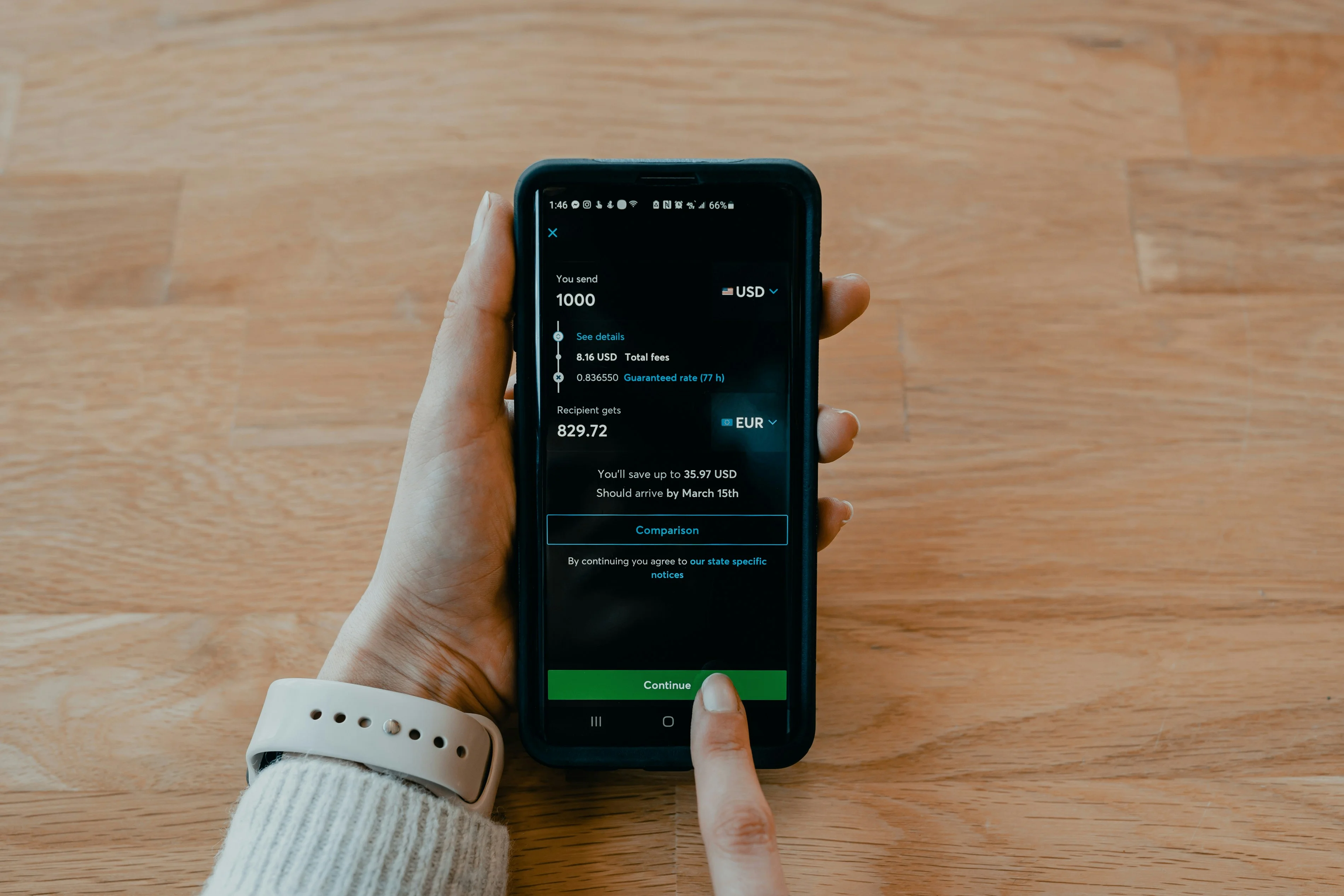
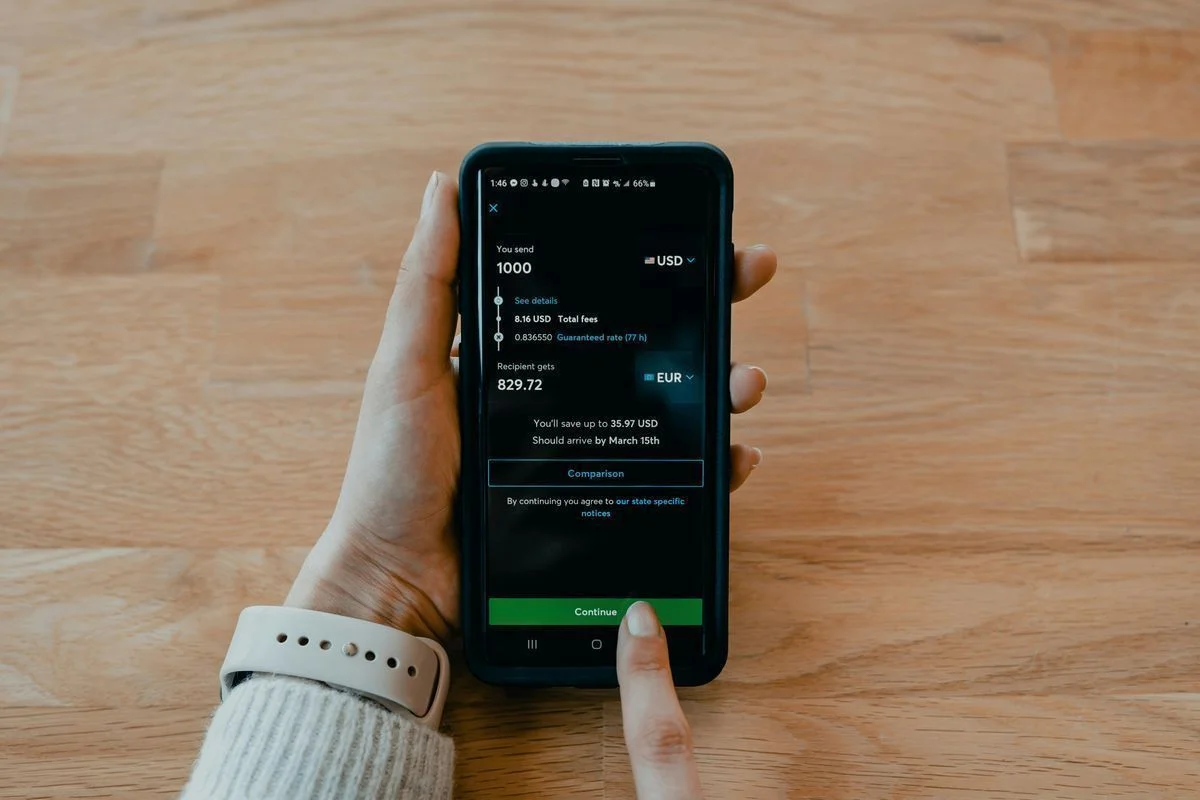
International Money Transfers for Expats in France (2025): Wise, Revolut, Banks – Fees, Rates, Real-World Tips
Finance · 14 Nov 2025

International Money Transfers for Expats in France (2025): Wise, Revolut, Banks – Fees, Rates, Real-World Tips

Moving money across borders is part of daily life for many expats: salary, pension, rent, children’s tuition, or supporting family abroad. Every euro matters, and bank fees can quietly eat a significant share of your income. In 2025, competition between fintechs like Wise, Revolut and N26 and traditional banks such as BNP Paribas, Société Générale or Crédit Agricole reaches a new phase. This guide breaks down real costs, delays, and practical ways to move your money without nasty surprises.

Read the article
Mobile Plans in France (2025) for Expats: eSIM, RIO, EU Roaming, Orange/Free, MVNOs—A Practical Guide
Culture · 13 Nov 2025

Mobile Plans in France (2025) for Expats: eSIM, RIO, EU Roaming, Orange/Free, MVNOs—A Practical Guide

New country, new habits—and the first blocker: getting a French number for appointments, banking, school, and healthcare. The good news: in 2025 it’s easier than ever thanks to eSIM, MVNOs, and cheap no-contract plans. This guide shows you, step-by-step, how to get a number within 24 hours, avoid hidden fees, and choose between Orange/Free/SFR/Bouygues and their budget brands (Sosh, RED, B&You) or prepaid options (Lebara, Lycamobile).

Read the article
International Schools in France: 2025 Pillar Guide (IB, British, American, Bilingual, Admissions, Costs)
Work · 11 Nov 2025

International Schools in France: 2025 Pillar Guide (IB, British, American, Bilingual, Admissions, Costs)

Moving to France with kids seems simple—until school comes into play. IB, British, American, bilingual… the options are vast but confusing. This 2025 pillar guide breaks down real differences, notable schools, and practical steps for a smooth enrollment—from first contact to first day.

Read the article
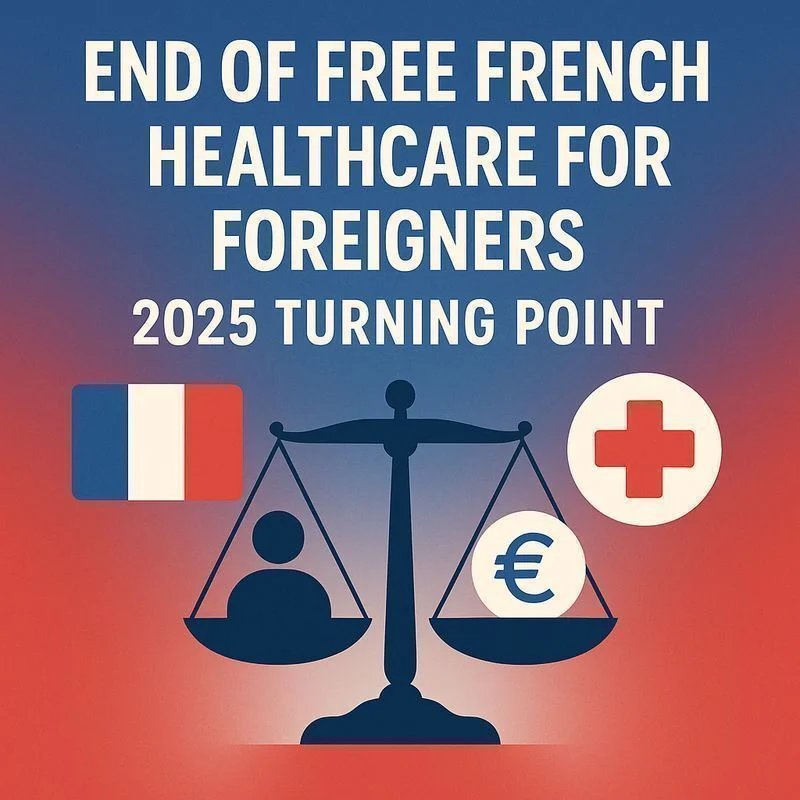
End of 'Free Social Security' for Foreigners in France: A Turning Point in 2025
Healthcare · 10 Nov 2025

End of 'Free Social Security' for Foreigners in France: A Turning Point in 2025

A single line in a new French law changes everything: France has ended free access to its public healthcare system for non-working foreign residents. Passed by 176 votes to 79, the reform now imposes a mandatory minimum contribution on retired foreigners, particularly from the U.S., U.K., and other G20 nations. Behind the vote lies both political intent—and deep concern among thousands of long-settled expatriates.

Read the article
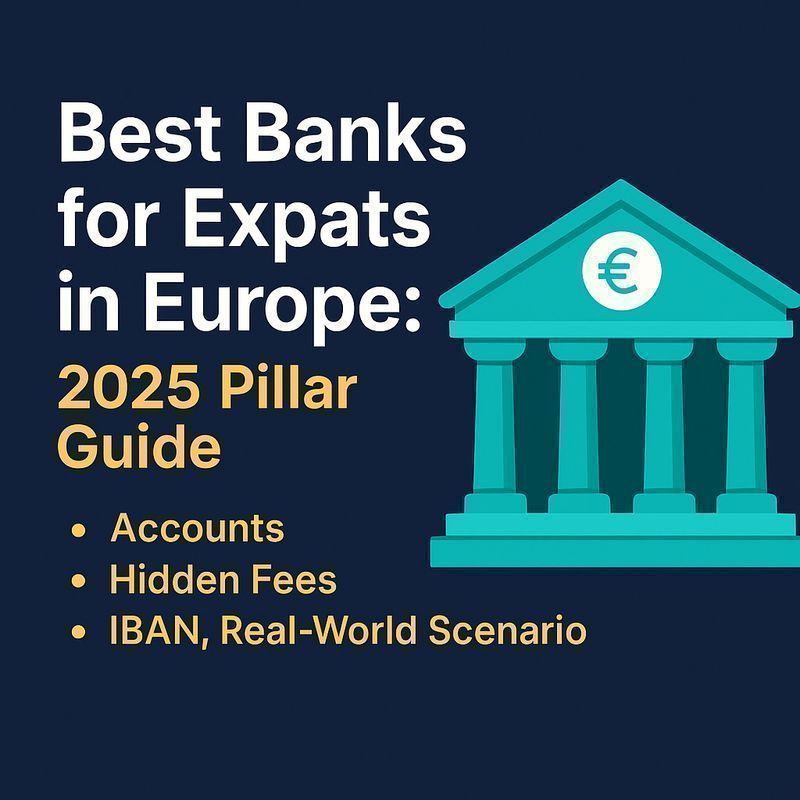
Best Banks for Expats in Europe: 2025 Pillar Guide (Accounts, Hidden Fees, IBAN, Real-World Scenarios)
Finance · 09 Nov 2025

Best Banks for Expats in Europe: 2025 Pillar Guide (Accounts, Hidden Fees, IBAN, Real-World Scenarios)

Most expats open a 'quick' account when they land. Then come surprise fees, blocked transfers, a provider rejecting your foreign IBAN. This 2025 pillar gives you a clear method to pick the right bank, avoid traps, and secure your money flows. No jargon—just readable tables, copy-paste scripts, and real scenarios (student, employee, freelancer, FR–CH cross-border).

Read the article
Mastering Your First Year Abroad: Budget, Bureaucracy & Belonging
Work · 08 Nov 2025

Mastering Your First Year Abroad: Budget, Bureaucracy & Belonging

The first six months abroad are the hardest. You juggle everything—housing, health, banking, taxes, and that mysterious 'number' everyone keeps asking for. But most expats eventually find their rhythm—with the right roadmap. This guide is your first-year blueprint, balancing finances, paperwork, and real life.

Read the article
Finding a Doctor, Dentist or Specialist Abroad: The Really Useful 2025 Guide (Scripts, Tips & Checklists)
Healthcare · 07 Nov 2025

Finding a Doctor, Dentist or Specialist Abroad: The Really Useful 2025 Guide (Scripts, Tips & Checklists)

The fever isn't the scariest part—it's how to quickly find someone trustworthy inside a healthcare system you don't know yet. The good news: there's a simple method, copy-paste scripts, clear checklists, and shortcuts to skip long waits. This 2025 guide takes you from "no idea where to start" to "appointment booked, reimbursement guaranteed."

Read the article
Switching Bank Accounts in Europe as an Expat: Avoid Freezes and Hidden Fees
Finance · 06 Nov 2025

Switching Bank Accounts in Europe as an Expat: Avoid Freezes and Hidden Fees

When you first arrived in Europe, you opened a bank account quickly—but now the fees, language barriers, or online access issues make you want to switch. The good news: changing bank accounts in Europe is easier than ever, if you avoid three major traps—blocked accounts, IBAN rejections, and hidden transfer fees.

Read the article
Fitting In Abroad: The Hidden Cultural Rules No One Tells You About
Culture · 03 Nov 2025

Fitting In Abroad: The Hidden Cultural Rules No One Tells You About

Integration isn't about becoming local overnight—it's about decoding the invisible rules that shape daily life: greetings, timing, small talk, hierarchy. Across Europe, these subtle differences make or break first impressions. Here are the 7 hidden rules every expat eventually learns—the easy way or the hard way.

Read the article
Best Banks for Expats 2025: How to Choose and Avoid Hidden Fees
Finance · 01 Nov 2025

Best Banks for Expats 2025: How to Choose and Avoid Hidden Fees

Whether you're on assignment, freelancing abroad, or retiring under the sun, choosing the right expat bank can mean peace of mind—or a financial nightmare. Transfer fees, FX markups, IBAN discrimination… In 2025, offers abound but not all are equal. Here's the complete guide to picking the best bank, opening an account remotely, and dodging the most common traps.

Read the article
The Never-Ending Visa: Stress-Free Renewals (Method, Checklists, Email Templates)
Visas & Residence · 30 Oct 2025

The Never-Ending Visa: Stress-Free Renewals (Method, Checklists, Email Templates)

Visa renewal in Europe can feel endless—forms, receipts, long waits—but it doesn't have to. With a structured plan, you can make it predictable and stress-free. This 2025 guide explains how to anticipate your steps, avoid system delays, and stay calm, with practical checklists and ready-to-send email templates.

Read the article
Scary Healthcare Myths: What Expats Get Wrong About EHIC, the Carte Vitale, and Private Insurance
Healthcare · 29 Oct 2025

Scary Healthcare Myths: What Expats Get Wrong About EHIC, the Carte Vitale, and Private Insurance

Halloween or not, some myths about European healthcare are truly frightening: 'everything's free,' 'the Carte Vitale works everywhere,' 'you don't need private insurance.' These false beliefs cost expats dearly. Here's a clear, human guide to understand your rights, avoid costly mistakes, and never find yourself uncovered abroad.

Read the article
Working Remotely Across Borders: How to Stay Compliant Between Two EU Countries
Work · 27 Oct 2025

Working Remotely Across Borders: How to Stay Compliant Between Two EU Countries

More and more expats work for a company in one country while living in another. It's convenient—but taxes, social security, and residence can quickly get tricky. Here's a practical guide to enjoy cross-border remote work without breaking any rules.

Read the article
France-Switzerland Cross-Border Worker Guide 2026: Tax, Healthcare, Permit G & Telework
Work · 24 Oct 2025

France-Switzerland Cross-Border Worker Guide 2026: Tax, Healthcare, Permit G & Telework

Around 235,000 French residents commute daily to a Swiss employer, making the France-Switzerland corridor the largest single cross-border labour flow in the European Economic Area. The rules governing this status are dense: two separate tax regimes depending on which Swiss canton employs you, a healthcare choice that must be made within three months of starting work and locks for a long time after, a Swiss residence permit (permit G) that requires you to return home at least once a week, two pension pillars to coordinate with the French régime général, and — since the post-pandemic Avenant signed on 27 June 2023 — a 40% cap on telework if you want to keep the frontalier tax regime. Get any of these wrong and the cost is real: double taxation, retroactive [LAMal](/en/blog/2026-03-28-lamal-vs-cmu-health-insurance-cross-border-worker) premiums, lost AVS quarters, an unenforceable contract. This guide walks through every layer in plain English with the legal references and forms you actually need, and shows where AdminLanding's tools fit into the workflow.

Read the article
Having a baby abroad: 30 days to secure identity, residence, and health coverage
Family · 21 Oct 2025

Having a baby abroad: 30 days to secure identity, residence, and health coverage

A baby arrives during your expat stay—congrats! The first 30 days are for laying administrative foundations: birth registration, identity documents, residence rights, health coverage, and family benefits. Here's a step-by-step plan.

Read the article
Working remotely from another EU country: rights, taxes, and work-life balance
Work · 20 Oct 2025

Working remotely from another EU country: rights, taxes, and work-life balance

More and more expats keep their original job while living elsewhere in Europe. But behind the freedom of cross-border remote work lie practical questions: taxes, social security, health coverage, and daily rhythm. Here's how to stay compliant and balanced.

Read the article
Entry/Exit System (EES): What Non-EU Nationals Need to Know Starting 2025
Visas & Residence · 16 Oct 2025

Entry/Exit System (EES): What Non-EU Nationals Need to Know Starting 2025

From October 2025, the European Union is gradually rolling out the new electronic Entry/Exit System (EES), replacing traditional passport stamps for non-EU nationals. If you are an expat not from the EU or planning short stays, this change affects your travel, border checks, and planning. This article calmly explains: the situation, what to expect, how to prepare, and key takeaways.

Read the article
European Health Insurance Card: What You Need to Know for Travel in 2025
Healthcare · 14 Oct 2025

European Health Insurance Card: What You Need to Know for Travel in 2025

Heading abroad in Europe while keeping your health coverage intact is still a common concern for expats. In 2025, the rules around the European Health Insurance Card (EHIC / CEAM) have some updates and reminders worth knowing. This article will walk you — step by step — through what the card covers, how to renew it, and how to stay protected while traveling or on temporary stays.

Read the article
Driving and getting around: exchanging your license, buying a used car safely, or living car-light
Visas & Residence · 13 Oct 2025

Driving and getting around: exchanging your license, buying a used car safely, or living car-light

Moving doesn't mean you need to choose between buying a car tomorrow or giving up mobility. Europe is kind to in-between solutions. Here's how to make smart transport choices in your first six months—license rules, safe car purchases, and surprisingly powerful car-light combos.

Read the article
Finding your first job abroad: how to localize your CV, get replies, and negotiate without feeling awkward
Work · 12 Oct 2025

Finding your first job abroad: how to localize your CV, get replies, and negotiate without feeling awkward

Job hunting in a new country feels like learning a new game with familiar pieces. The rules change a little—how you format your CV, when people answer, how offers are written—but the goal is the same: show your value clearly and politely. This guide walks you from the first profile tweak to a signed contract, with examples you can reuse.

Read the article
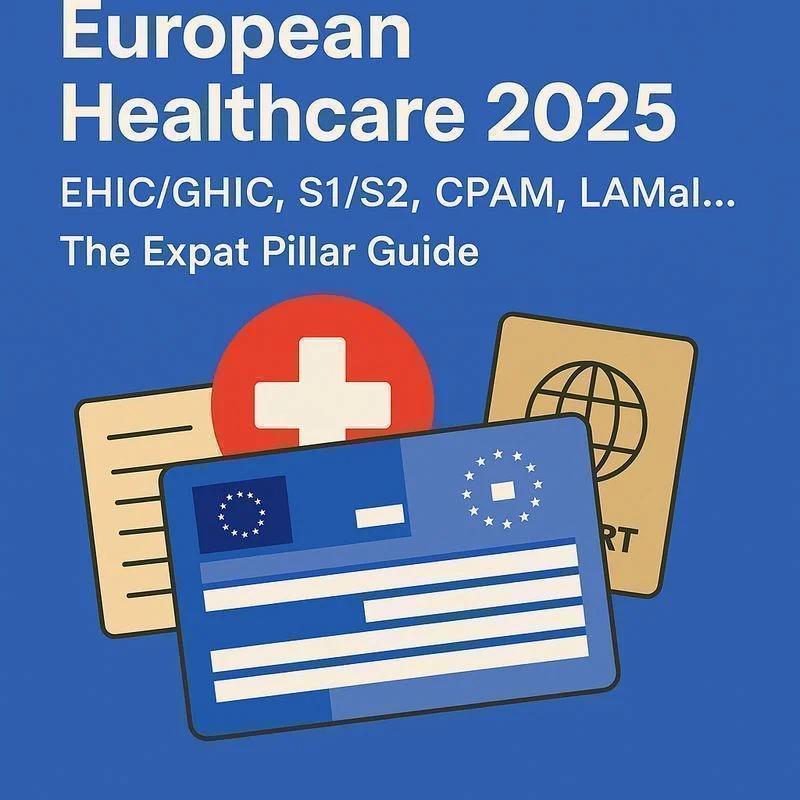
Healthcare for European expats: EHIC, S1, local registration and private cover (2026 guide)
Healthcare · 09 Oct 2025

Healthcare for European expats: EHIC, S1, local registration and private cover (2026 guide)

Health coverage in Europe is one of the few rights that does not automatically follow your passport — it follows your registered residence, your employment status, and how long you intend to stay. A British retiree in Spain, a Dutch freelancer in Berlin and a French employee on a 6-month assignment in Italy are governed by three different sets of EU regulations and three different reimbursement timelines. This guide walks through the four most common situations, the documents each one demands, and the order in which to do things so you are never uninsured between two systems. It is not exhaustive country-by-country (each national system has its own quirks) but it is the framework that applies under Regulation (EC) 883/2004 — the EU coordination of social-security regulation that every EU/EEA/Swiss country implements.

Read the article
Renting your first home in Europe: dossier, viewing rules, utilities and real scam shields
Housing · 08 Oct 2025

Renting your first home in Europe: dossier, viewing rules, utilities and real scam shields

Most rental mistakes happen before the viewing. Build your dossier, know the red flags, and secure utilities from day one.

Read the article
Expat banking in Europe: open fast, pay less, get paid on time
Finance · 07 Oct 2025

Expat banking in Europe: open fast, pay less, get paid on time

Use a two-step strategy: open a digital account now, a local account later. You'll avoid fees, pass KYC faster, and never miss payroll.

Read the article
The European Expat Pre-Move Master Plan: 90/60/30/7-day checklist, scripts and pitfalls
Preparation · 06 Oct 2025

The European Expat Pre-Move Master Plan: 90/60/30/7-day checklist, scripts and pitfalls

Moving countries is a project. Treat it like one. Use the 90/60/30/7 timeline below to avoid last-minute stress and the classic traps that cost time and money.

Read the article