ExpatAdminHubEuropean expat guide
FR
Menu▾
HomePrivacyCookiesAboutContact
All guidesPreparationHousingFinanceHealthcareWorkFamily
ExpatAdminHubEuropean expat guide
HomePrivacyCookiesAboutContact
Categories
All guidesPreparation (checklists, visas, moving)Housing (rentals, utilities, neighborhoods)Finance (banking, taxes, budgeting)Healthcare (insurance, doctors, pharmacies)Work (jobs, contracts, work permits)Family (schools, childcare, family life)Culture (language, customs, integration)
FR

ExpatAdminHub

Practical guides for European expats navigating admin, housing, healthcare, and everyday life abroad.

Navigation

HomeAboutContactPrivacyTermsSitemap

Stay Updated

1 tip per week, no spam.

© 2026 ExpatAdminHub · European expat guide.
FR
  1. Home
  2. Blog
  3. Housing & Finance
  4. European Housing 2025: Rent Caps, New Tenant Rights & Digital Contracts — The Essential Expat Guide
European Housing 2025: Rent Caps, New Tenant Rights & Digital Contracts — The Essential Expat Guide

European Housing 2025: Rent Caps, New Tenant Rights & Digital Contracts — The Essential Expat Guide

Published December 7, 2025

Europe’s rental market is hitting a historic turning point. With soaring rents, massive post-COVID relocations, remote work shifting demand, and housing shortages in several countries, the EU and national governments have accelerated reforms. The result: 2025 is a decisive year for expats. New rent caps are spreading, tenant rights are expanding, governments are inspecting quality more aggressively, and a silent revolution is underway: the digitalisation of rental contracts. This long-form guide—written for expats navigating unfamiliar systems—explains what’s changing, how to prepare, and how to avoid the administrative traps of renting in a country you’re still learning to decode.

1) Why 2025 changes everything for expats

Across Europe, the housing crisis has become structural rather than temporary. In cities such as Amsterdam, Dublin, Geneva, Luxembourg, Paris, Berlin and Barcelona, vacancy rates are extremely low, while demand from students, remote workers and multinational staff keeps rising. Governments are responding with tighter rules, rent caps, quality controls and digital administration.

For expats, 2025 concentrates three major challenges at the same time:

  1. Understanding local tenancy laws that are often complex and very different from your home country.
  2. Proving that your home is compliant (minimum surface, safety, energy performance, permitted use).
  3. Navigating several layers of administration at once: housing insurance, municipal registration, tax numbers, social security, and sometimes eligibility for benefits.

The positive news is that reforms are now explicitly trying to protect tenants, including foreigners. To understand the broader context of the rent surge itself, you can read this article together with our detailed market analysis: The 2025–2026 Expat Housing Shock.

2) Rent caps in 2025: how key countries are moving

Rent caps are evolving quickly and can differ street by street. The goal is usually to slow down rent increases while still allowing investment and renovation.

France

  • Extended rent control in large cities such as Paris, Lyon, Lille, Montpellier and Bordeaux.
  • Reference rents by zone with a legal maximum and limited authorised surcharges.
  • In some regions, digital contracts and standardised clauses make it easier to contest abusive rents.

Germany

  • Local caps linked to previous average rents and, in some cities, experimental models that connect maximum rent to energy performance and surface.
  • Stricter rules around furnished rentals and short-term contracts in cities like Berlin and Munich.

Netherlands

  • Generalisation of the points system, or woningwaarderingsstelsel, where rent is determined by a score based on size, quality, location and energy label.
  • Many apartments fall into regulated categories with an official maximum rent; tenants can ask the authorities to recalculate if they suspect overpricing.

Spain

  • Designation of “stress zones” where annual rent increases are limited, often to a few percent per year.
  • Regional governments have more power to regulate short-term rentals and investment properties.

Austria and Belgium

  • Overall price levels remain more moderate than in the most overheated markets but come with tighter quality controls.
  • Increasing use of standard contracts and, in Belgium, digital registration of leases.

Because rules vary so much, always check a trusted local source before signing. Our earlier article about residence rules in Europe can help you link housing choices with your long-term status: EU residency changes 2025.

3) New tenant rights expats must know in 2025

Three protections are becoming standard across an increasing number of European countries:

  • Right to a compliant home: minimum surface, heating, ventilation, electrical safety and sometimes limits on humidity or noise.
  • Energy transparency: you should receive an official energy certificate such as DPE, Energieausweis or EPC, with clear information on estimated consumption and performance.
  • Obligation for the landlord to provide a written, usually digital, contract in a language you can reasonably understand.

In many places you can now:

  • Ask the municipality or housing authority to inspect a home if you suspect serious safety or overcrowding issues.
  • Challenge the rent level when it clearly exceeds local rules or the official points system.
  • Request reclassification of a short-term or tourist rental that is being used as a long-term home.

These rights are especially important for expats, who are often unfamiliar with local norms and more vulnerable to pressure. Before you sign, combine this checklist with our guide on energy suppliers and housing charges: Energy supplier and housing charges before winter.

4) Digital rental contracts: the administrative shift of the year

Beyond rent caps, 2025 is also the year when housing administration becomes truly digital in many countries.

Concrete examples you will encounter:

  • France: rollout of official digital lease templates, widespread use of electronic signatures, and growing use of online platforms to register contracts and inventories.
  • Spain: more regions are moving to mandatory electronic signatures and online filing for standard residential leases.
  • Belgium: digital registration of leases is progressively becoming the norm instead of paper-only processes.
  • Germany and other countries: online pre-registration in some cities, digital Anmeldung or address declarations, and more municipal portals in English.

For expats, this has clear advantages:

  • Fewer lost documents and easier remote signing before arrival.
  • Faster processing of deposits and registration.
  • Photo or video inventories that can be stored and shared easily.

However, a digital lease is not automatically a compliant one. You still need to verify the legal status of the dwelling, the correct surface, energy score, permitted use, and the identity of the owner or authorised agency. If you work remotely across borders, you can also cross-check with our guide on remote work and compliance in Europe: Working remotely across borders in the EU.

5) Avoiding housing scams in 2025

Tight markets attract fraudsters. Typical scams in 2025 include:

  • Fake owners using stolen photos and asking you to pay a deposit before any viewing.
  • Listings based on very old photos that hide serious deterioration.
  • Requests for deposits or first rent through money transfer operators such as Western Union or anonymous crypto payments.
  • Homes that are not officially declared for residential use or that lack mandatory permits.

To protect yourself, apply a strict protocol:

  • Verify the identity of the owner or agency by checking official business registers or, where possible, the land registry.
  • Organise at least a video visit if you cannot travel, and ask to see the building entrance, mailbox and surroundings, not only the interior.
  • Never send a deposit or first rent before receiving and signing a full written contract.
  • Be cautious of prices that are far below market level; in 2025 “too good to be true” almost always is.

For a step-by-step rental file and viewing checklist, combine this article with our foundation guide: Renting your first home abroad.

6) Municipal registration: the forgotten step for many expats

In several European countries, declaring your address to the municipality is not optional. It is a legal obligation and a gateway to many other rights.

Key examples:

  • Germany: Anmeldung at the local Bürgeramt within a set number of days after moving.
  • Belgium: registration at the commune or gemeente, sometimes followed by a home visit from the police.
  • Netherlands: registration in the BRP (Basisregistratie Personen) at the gemeente, necessary for a BSN (citizen service number).

Without this registration you may face:

  • Difficulties accessing public or mandatory health insurance.
  • Problems opening local bank accounts or receiving official letters.
  • Delays for residence permits, family reunification or tax numbers.

Your lease, even digital, must usually allow you to register at the address. If the landlord refuses, treat it as a serious warning sign. For the bigger picture on how address registration interacts with residence rights, see: EU residency changes 2025.

7) Housing insurance: what is mandatory or expected

Insurance obligations differ by country, but in practice most landlords will expect some protection on your side.

Typical patterns in 2025:

  • France: tenant home insurance is usually mandatory and checked at move-in and renewal.
  • Germany: private liability insurance (Haftpflicht) and often household contents insurance (Hausrat) are strongly recommended, even when not strictly required by law.
  • Switzerland: cantons may impose compulsory fire or building insurance, with waste and recycling fees managed locally.
  • Spain and Portugal: housing insurance is often left to the owner, but tenants are advised to protect their belongings and civil liability.

Check whether you can bundle housing insurance with other expat essentials, and whether you qualify for housing benefits or allowances. In France, for example, family and housing allowances are managed by CAF, which may help reduce net housing costs if you meet the conditions.

8) Local taxes and hidden housing costs

Rent is only part of your housing budget. Local taxes and fees can significantly change the real cost of an apartment.

Examples you are likely to encounter:

  • France: residual housing taxes on vacant or secondary homes in some cities, plus rising local taxes that may be reflected in service charges.
  • Germany: the broadcasting contribution (Rundfunkbeitrag), payable per household, not per person.
  • Switzerland: waste disposal and recycling fees, often through pay-per-bag systems or municipal invoices.
  • Spain: property tax (IBI) is legally paid by the owner but can be indirectly reflected in rent or service charges.

When you compare cities, always include these elements alongside energy, internet and transport. Our year-end checklist for expats in Europe can help you review taxes, housing and banking together: Expat year-end checklist in Europe.

9) Case study: Anna in Amsterdam

Anna, an engineer from Canada, accepts a job in Amsterdam and starts looking for a one-bedroom flat. With help from colleagues, she discovers the Dutch points system and an official rent calculator.

By entering the apartment’s size, energy label and amenities, she realises the advertised rent is 280 euros above the legal maximum for that category. Instead of walking away, she files a structured complaint and attaches her digital lease and photos.

Within four weeks, the rent is revised down to the legal ceiling. Over a year, that difference represents 3,360 euros saved, without having to move again. The key ingredients were a clear legal framework, a digital contract that could be checked, and the confidence to use official dispute channels.

If you are moving to cities such as Amsterdam, Berlin or Vienna, combine this guide with our broader article on the housing shock in Europe: Expat housing shock 2025–2026.

10) 2025 housing checklist for expats

Use this practical checklist before you sign a lease or renew one in Europe:

  • Verify whether your city applies rent caps or a points system, and how to check official reference rents.
  • Request and keep a full digital copy of the lease, annexes and inventory, ideally in both the local language and a language you understand well.
  • Obtain the official energy certificate (DPE, Energieausweis, EPC or equivalent) and factor estimated consumption into your budget.
  • Confirm that you can register your address legally at the property and that the use (residential, student, short stay) matches your situation.
  • Prepare a complete digital file: ID, work contract, payslips, tax numbers, proof of savings and any guarantor documents.
  • Set up a reliable European bank account for rent payments and deposits. You can compare options using our dedicated banking guides, starting with Best banks for expats in Europe 2025 and the update on IBAN rules: EU banking strategies 2025.
  • Note key renewal and notice dates in your calendar and review local rules at least once a year as reforms continue.

If you want to go even further, you can also read our winter preparation guide focused on energy and support schemes: Winter preparation in Europe: energy, housing and support.

Frequently Asked Questions

Can expats challenge rent overpricing?

Yes. In many European countries, tenants can use official calculators, rent tribunals or municipal services to check whether a rent complies with local rules. When the rent is clearly above the legal maximum, you can usually file a structured complaint and request a reduction, sometimes even after you have moved in.

Are digital rental contracts as valid as paper ones?

In most European countries, a properly signed digital lease has the same legal value as a paper version, especially when electronic signatures and mandatory clauses are respected. What matters is not the format but the content: identity of the parties, description of the dwelling, duration, rent, charges, deposit and termination rules. Always download and store a full copy of your contract and inventory.

Stay updated

For more practical insights on this topic, explore our related articles:

  • Best Rental Management Apps for French Landlords in 2026
  • Managing a French Rental Property from Abroad: Mandataire vs DIY in 2026
  • CAF Registration in France: Complete Guide to Housing Aid (APL, ALF, ALS) for Expats (2026)
  • État des Lieux in France: Complete Guide to Move-In and Move-Out Property Inspections (2026)

Tool by AdminLanding

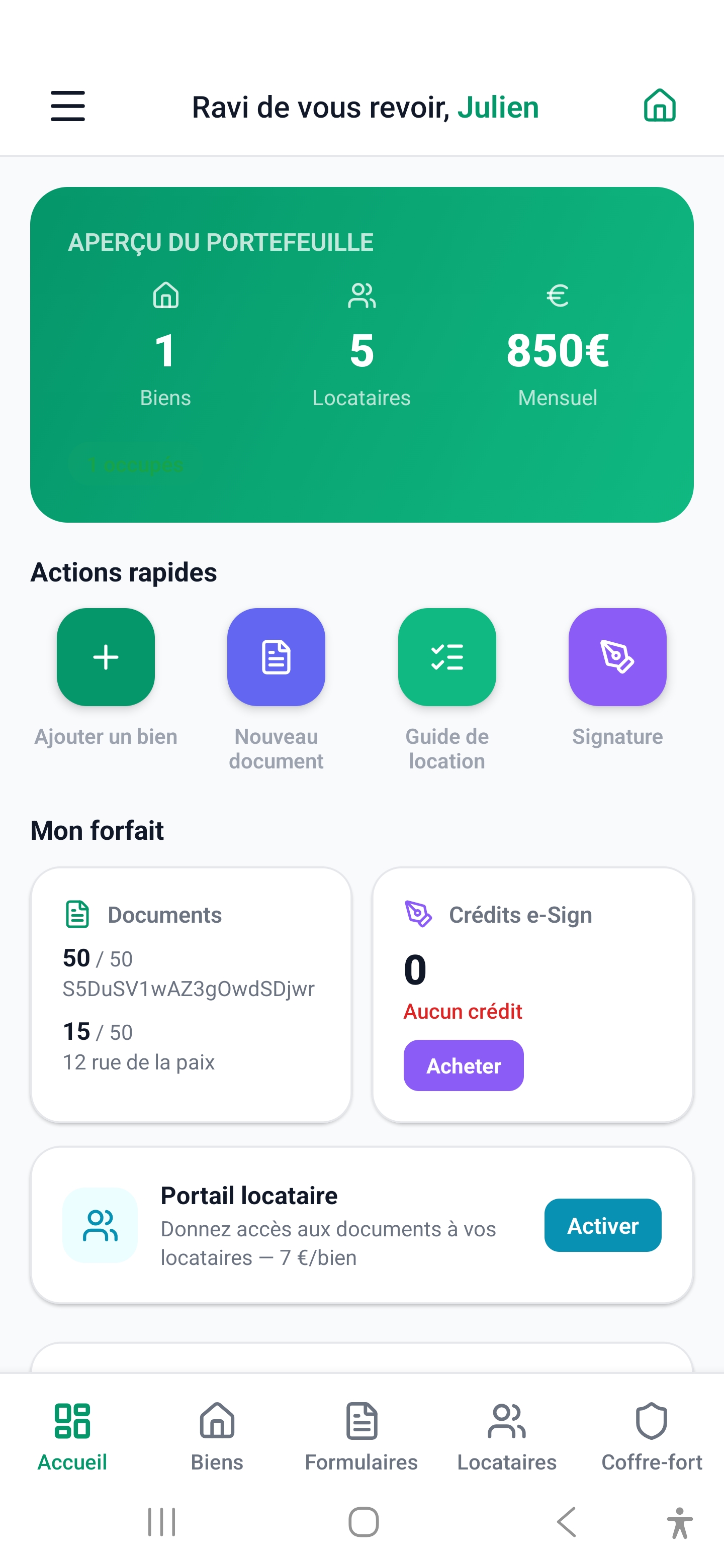
Manage your French rental from your phone

Rent — Bail, Quittance, Loyer generates ALUR-compliant leases, rent receipts, digital états des lieux and 21 rental documents — eIDAS e-signature, bilingual FR/EN. €49 starter pack, no subscription.

Get Rent — Bail, Quittance, Loyer

Conclusion: European housing is becoming more transparent, digital and regulated. For expats, 2025 is the opportunity to secure safe, compliant and fairly priced housing — as long as they use the right administrative tools.

Tool by AdminLanding

Manage your French rental from your phone

Rent — Bail, Quittance, Loyer generates ALUR-compliant leases, rent receipts, digital états des lieux and 21 rental documents — eIDAS e-signature, bilingual FR/EN. €49 starter pack, no subscription.

Get Rent — Bail, Quittance, Loyer→

Stay Updated

1 tip per week, no spam.

About the author:

Julien Maurice is the founder of AdminLanding and writes the editorial guides on ExpatAdminHub covering European expat life, France-Switzerland cross-border work, and French administrative procedures. Contact: [email protected]

Related posts

Best Rental Management Apps for French Landlords in 2026
Housing•May 11, 2026

Best Rental Management Apps for French Landlords in 2026

If you rent out property in France in 2026, the choice of rental-management software is no longer between spreadsheet and agency. Six SaaS products now hold the bulk of the French independent-landlord market — Rentila (≈50,000 landlords), BailFacile, GérerSeul, Hestia Software, Smartloc and Smovin — alongside Rent — Bail, Quittance, Loyer, the only mobile-native option built jointly for landlords and tenants. They differ on what they treat as the unit of work (the property, the lease, the document, the calendar). They differ on language (most are French-only). They differ on what they ship for the tenant side (most ship nothing). This guide compares the seven that matter, applied to the situation that defines this audience: an expat or non-resident landlord with one to five properties who needs ALUR-compliant paperwork done at distance without paying 6–10% to a mandataire de gestion.

Read the article
Managing a French Rental Property from Abroad: Mandataire vs DIY in 2026
Housing•May 3, 2026

Managing a French Rental Property from Abroad: Mandataire vs DIY in 2026

If you own a French rental property and don't live in France, every operational decision splits two ways: hire a mandataire de gestion (a regulated French property manager) and pay a percentage of every month's rent for the rest of the lease, or run the property yourself from another country and design around the time-zone, language and signature constraints that come with it. Both work in 2026 — French law has become materially friendlier to the at-distance landlord since the eIDAS regulation (EU 910/2014) made qualified electronic signatures legally equivalent to wet ink, since the lettre recommandée électronique (Décret n° 2018-347 of 9 May 2018) replaced the post-office trip for most legal notices, and since the digital lease and digital état des lieux became routine practice. This guide compares the two paths, walks through the legal infrastructure that makes DIY feasible, and shows where the work actually happens day-to-day for non-resident landlords.

Read the article
CAF Registration in France: Complete Guide to Housing Aid (APL, ALF, ALS) for Expats (2026)
Housing•April 26, 2026

CAF Registration in France: Complete Guide to Housing Aid (APL, ALF, ALS) for Expats (2026)

The Caisse d'Allocations Familiales (CAF) administers three housing-aid schemes — APL (aide personnalisée au logement), ALF (allocation de logement familiale), and ALS (allocation de logement sociale) — covering roughly 6 million households in France, with eligibility now based on income calculated on a rolling 12-month window since the 2021 reform (revenus contemporains). For an expat just arrived, the picture rarely starts that clean. Which of the three aids applies depends on whether your dwelling is conventionné with the State, on your family composition, and on whether anyone else in the household qualifies for family benefits. Eligibility also requires a stable and regular residence in France, a valid titre de séjour for non-EU nationals, a décent dwelling that meets minimum surface and energy criteria, and an online dossier on caf.fr. The first payment lands roughly 6 to 8 weeks after the application is validated — and only after a one-month carence during which no aid is paid. This guide walks through which aid applies to your situation, what documents CAF actually asks for, how the espace allocataire works, and the mistakes that delay or kill applications. Read this before signing the lease whenever possible.

Read the article