If 2026 is the year you became a French landlord — whether by buying a rental, inheriting one, or moving abroad while keeping a property you previously occupied — the first 90 days set the trajectory for everything that follows.
Days 1–7: identify your tax status. Run the Article 4 B test honestly. If you spend more than 183 days a year in France, more than half your professional activity is in France, or your family lives there, you are resident and the SIPNR doesn't apply — file in your usual département. If none of those is true, you are non-resident and the SIPNR is your tax office for life until that changes.
Days 8–30: get a numéro fiscal if you don't have one. Use the demand form on impots.gouv.fr. Attach a copy of the notary's acte de vente if it's a recent purchase. The number arrives by post at the address you nominate.
Days 30–60: choose your rental regime. Unfurnished defaults to micro-foncier (30% flat abatement, simple) up to €15,000 gross rents, then forces régime réel (deduct real expenses including loan interest, works, insurance, property tax). Furnished defaults to micro-BIC (50% abatement) up to €83,600 of gross receipts for 2026 income (the ceiling was €77,700 for 2025 income; the Loi de finances 2026 revalued the micro thresholds for 2026–2028), then forces régime réel under LMNP. The directionality of the lock-in matters: opting out of micro-foncier into régime réel binds you to régime réel for 3 years under Article 32-4 CGI, and the option auto-renews tacitly afterwards unless explicitly revoked. The reverse — going back to micro-foncier — is automatic the year your gross rents drop back below €15,000, no formality required. For furnished LMNP, the régime-réel option under Article 50-0 CGI is annual and renews tacitly, so the lock-in is materially weaker than on the unfurnished side. For the full furnished-vs-unfurnished decision matrix specific to foreign owners, see our furnished vs unfurnished decision guide.
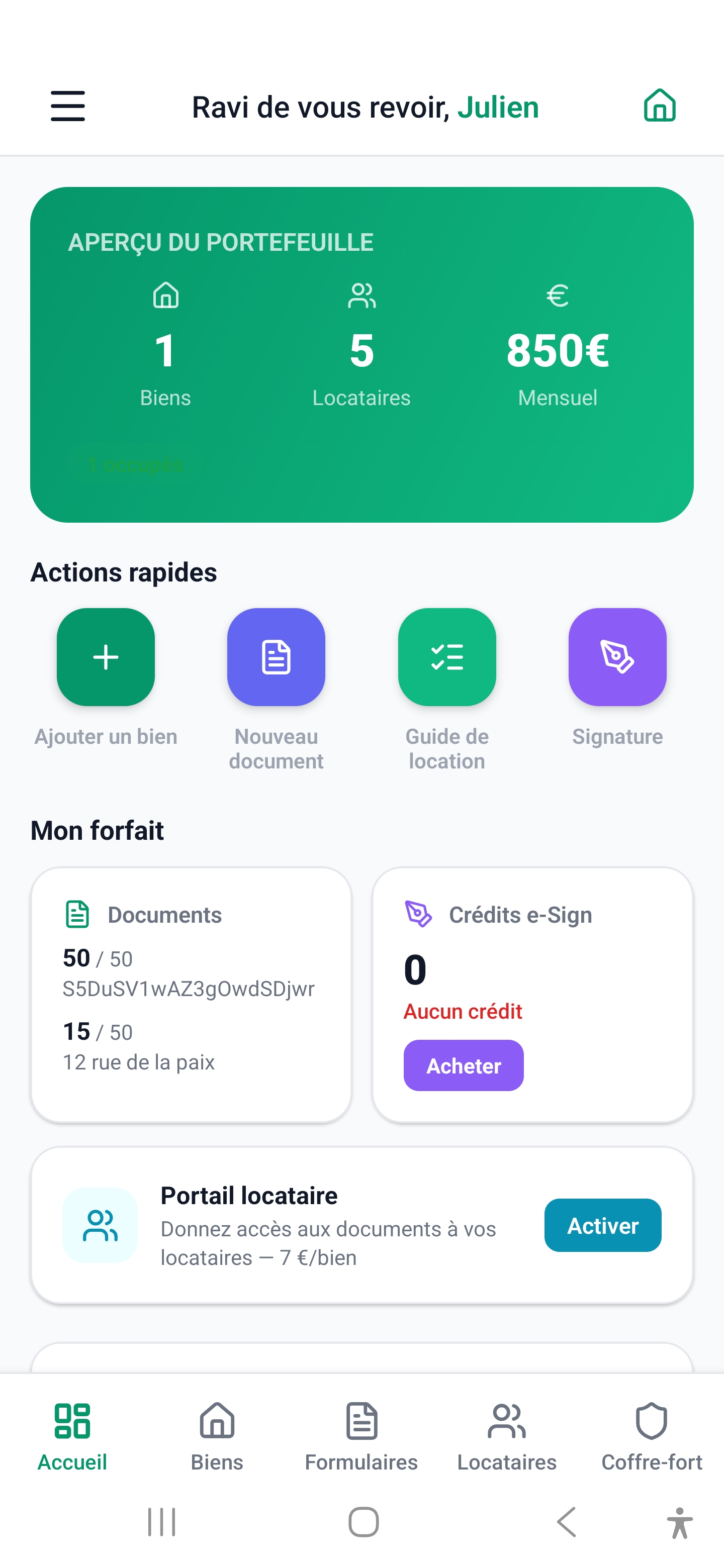
Days 60–90: organise your supporting documents. The FISC may not ask for them this year, but if it does (DGFiP redressements increased 9.9% in 2024 to €16.7 billion per the DGFiP rapport d'activité 2024 published June 2025), it asks for lease contract, monthly quittances de loyer for the year, dépôt de garantie receipt, état des lieux d'entrée et de sortie if a tenancy ended, taxe foncière notice, insurance certificate (PNO), and bank statements showing rent received. Files scattered across email and shoeboxes are a problem at 200 km from the property; centralised storage is what saves hours under audit. A simple cloud folder works; the AdminLanding web dashboard for rental management does the same with the documents pre-generated and grouped by lease — useful for a non-resident landlord who needs the back-office work to happen without a French desk to sit at.
For the operational decision between hiring a mandataire de gestion and self-managing remotely (eIDAS signatures, lettre recommandée électronique, address-of-service rules), see our remote management guide.
Bookmark, don't memorise: the SIPNR phone number (+33 1 72 95 20 42), the official non-resident page on impots.gouv.fr, ANIL's free legal helpline at anil.org, and the BOFiP RFPI section.