ExpatAdminHubEuropean expat guide
FR
Menu▾
HomePrivacyCookiesAboutContact
All guidesPreparationHousingFinanceHealthcareWorkFamily
ExpatAdminHubEuropean expat guide
HomePrivacyCookiesAboutContact
Categories
All guidesPreparation (checklists, visas, moving)Housing (rentals, utilities, neighborhoods)Finance (banking, taxes, budgeting)Healthcare (insurance, doctors, pharmacies)Work (jobs, contracts, work permits)Family (schools, childcare, family life)Culture (language, customs, integration)
FR

ExpatAdminHub

Practical guides for European expats navigating admin, housing, healthcare, and everyday life abroad.

Navigation

HomeAboutContactPrivacyTermsSitemap

Stay Updated

1 tip per week, no spam.

© 2026 ExpatAdminHub · European expat guide.
FR
  1. Home
  2. Blog
  3. Housing
  4. LMNP Furnished Rental Tax 2026: Micro-BIC vs Régime Réel Explained
LMNP Furnished Rental Tax 2026: Micro-BIC vs Régime Réel Explained
This article is also available in French.
Lire en français →

French rental law series

  • Non-resident landlord rental tax (2044)
  • French bail lease: full guide
  • Landlord obligations: rent receipts
  • Free quittance template (legal guide)

LMNP Furnished Rental Tax 2026: Micro-BIC vs Régime Réel Explained

Published May 13, 2026

Rent out a furnished property in France and your income is not revenus fonciers — it is BIC (industrial and commercial profit), under the LMNP regime. That single difference changes everything: the allowances, the ability to deduct depreciation, and even how your eventual sale is taxed after the 2025 reform. Here is how LMNP works in 2026, the micro-BIC vs régime réel choice that decides your tax bill, and the recent rule changes every furnished landlord should know.

Key facts

  • Furnished rental income is taxed as BIC under the LMNP (Loueur en Meublé Non Professionnel) regime — not as revenus fonciers.
  • Micro-BIC gives a flat allowance: 50% for standard long-term furnished (gross receipts ≤ €77,700); reduced rates apply to tourist lets.
  • The régime réel lets you deduct real expenses plus depreciation (amortissement) of the property and furniture — often cutting taxable income to near zero.
  • You stay LMNP (non-professional) while furnished receipts are under €23,000/year or below your household's other earned income; above both, you become LMP.
  • Since the 2025 reform (loi Le Meur), depreciation deducted under the réel is reintegrated into the capital gain when you sell.

Why furnished rental is taxed differently

A furnished let is treated as a commercial activity, so the income falls under BIC (bénéfices industriels et commerciaux), declared in the LMNP regime when you are a non-professional landlord. This is a different world from unfurnished rent (revenus fonciers): different forms, different allowances, and — the headline LMNP advantage — the ability to depreciate the asset.

To qualify as a genuine furnished let, the property must come with the legally required furniture and equipment (bed, cooking facilities, fridge, table, etc.) so the tenant can move in and live with just their suitcase. Get the furnishing wrong and the tax office can requalify the let as unfurnished.

Micro-BIC: the simple flat-allowance route

Under micro-BIC you declare gross receipts and the tax office applies a flat allowance — no accounting required:

  • Standard long-term furnished: 50% allowance, available up to €77,700 of gross annual receipts.
  • Classified tourist accommodation (meublé de tourisme classé): 50% allowance (reduced from the old 71%), with its own threshold.
  • Unclassified tourist accommodation: 30% allowance, with a low €15,000 threshold since the 2024 reform.

Micro-BIC is effortless and works well when your real expenses are low. But it caps your deduction at the flat percentage — you cannot deduct interest, works, or depreciation on top.

Régime réel: deduct expenses and depreciation

The régime réel is where LMNP becomes powerful. You deduct your actual expenses — loan interest, works, management and accountancy fees, insurance, the taxe foncière, co-ownership charges — and you depreciate the property (excluding land) and the furniture over their useful lives.

That depreciation is a non-cash deduction: it reduces taxable profit without costing you anything in the year. In practice, many réel-regime LMNP landlords report little or no taxable income for years, even while collecting rent. The trade-off is that the réel requires proper accounts — most landlords use an accountant — and is declared on the professional forms (2031 + 2042-C-PRO). Above €77,700 of receipts, the réel is mandatory anyway.

Get the next rental guide before your neighbours do

We send one practical landlord/tenant tip per week — bail, ALUR, DPE, quittance. No spam, unsubscribe anytime.

LMNP vs LMP, and the 2025 sale-tax change

You remain LMNP (non-professional) as long as your annual furnished receipts stay under €23,000 or under the total of your household's other earned income. Cross both lines and you become LMP (professional), with different social-contribution and capital-gains rules.

The big recent change: under the 2025 reform (loi Le Meur), the depreciation you deducted under the réel is now reintegrated into the capital gain when you sell — increasing the taxable gain compared with the old, more generous treatment. It does not remove the year-to-year benefit of depreciation, but it changes the long-term maths, so the réel's advantage now depends partly on how long you hold and your exit plan. This is exactly the kind of trade-off worth modelling with an adviser before choosing.

Choosing — and staying compliant year to year

As a rule of thumb: if you have a mortgage, did works, or bought recently, the régime réel usually wins thanks to interest and depreciation; if your costs are minimal and you value simplicity, micro-BIC may be enough. Run both numbers before committing — the réel election binds you for a period.

Whichever you pick, furnished letting still needs the underlying rental paperwork done right: a compliant furnished lease, an inventory of the furniture (inventaire du mobilier), the entry/exit état des lieux, and rent receipts. Keeping those generated and stored cleanly is what makes either tax regime — and any future check — straightforward.

Frequently Asked Questions

Is furnished rental income taxed as revenus fonciers?

No. Furnished rental income is taxed as BIC (industrial and commercial profit) under the LMNP regime, not as revenus fonciers. That brings different forms, different allowances, and the ability to deduct depreciation under the régime réel.

What is the micro-BIC allowance for furnished rentals?

50% for standard long-term furnished lets up to €77,700 of gross receipts. Classified tourist accommodation also gets 50% (reduced from 71%), while unclassified tourist lets get 30% with a €15,000 threshold since the 2024 reform.

What can I deduct under the LMNP régime réel?

Actual expenses — loan interest, works, management and accountancy fees, insurance, taxe foncière, co-ownership charges — plus depreciation (amortissement) of the property (excluding land) and the furniture. Depreciation is a non-cash deduction that often reduces taxable income to near zero.

When do I become LMP instead of LMNP?

You become a professional furnished landlord (LMP) when your annual furnished receipts exceed €23,000 and also exceed your household's other earned income. Below either threshold you remain LMNP.

Did the 2025 reform change LMNP taxation?

Yes. Under the loi Le Meur, depreciation deducted under the régime réel is now reintegrated into the capital gain when you sell, increasing the taxable gain versus the previous treatment. The year-to-year depreciation benefit remains, but the long-term maths changed.

Can a non-resident be an LMNP landlord?

Yes — non-residents can let furnished property in France under LMNP and choose micro-BIC or the réel. The income is taxable in France (BIC), and the non-resident minimum-rate and social-levy rules also apply. Confirm your situation with a French adviser.

Stay updated

For more practical insights on this topic, explore our related articles:

  • Non-Resident Landlord French Rental Tax: The 2026 Declaration Guide (2044 / 2042)
  • Best Rental Management Apps for French Landlords in 2026
  • Furnished or Unfurnished? The Tax & Lease Decision for Foreign French Property Owners (2026)
  • Managing a French Rental Property from Abroad: Mandataire vs DIY in 2026

Tool by AdminLanding

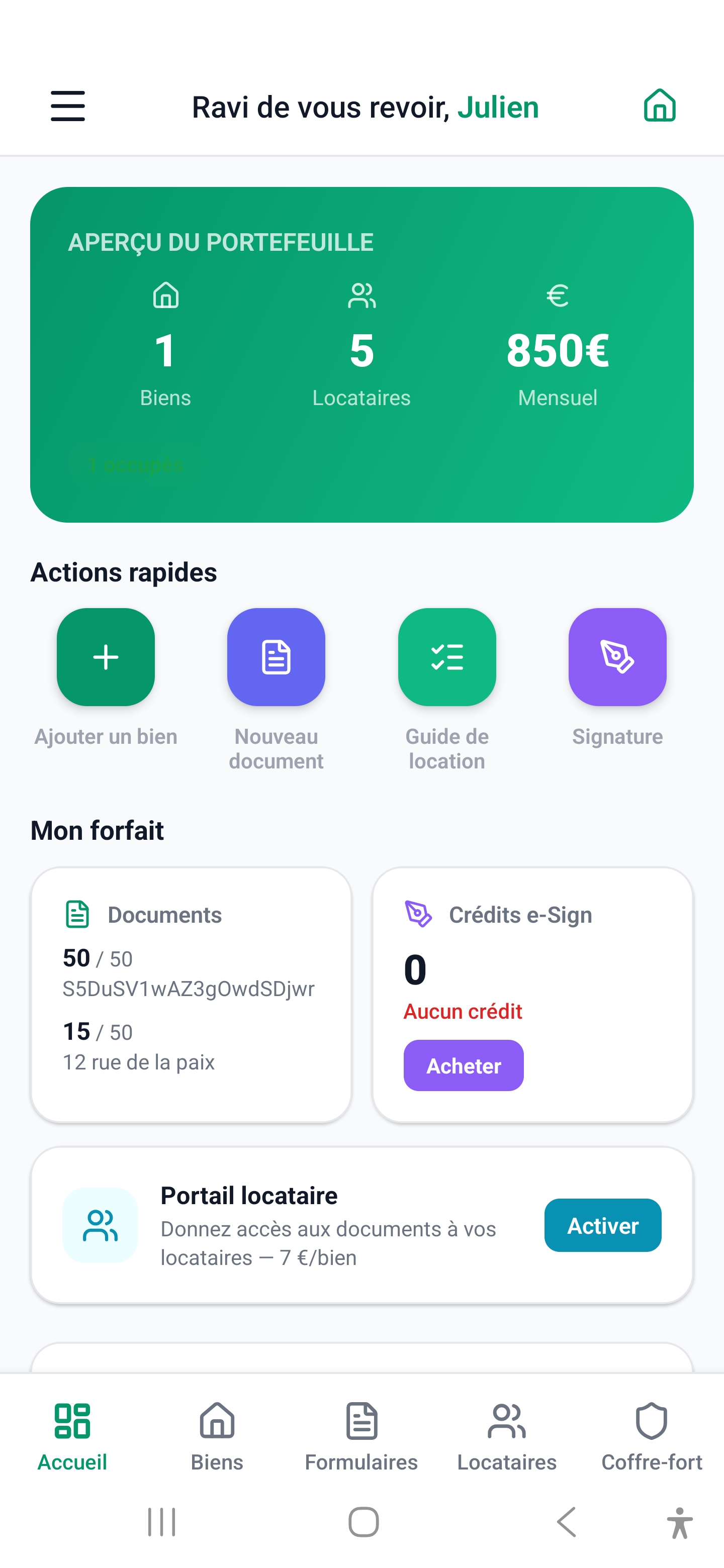
Manage your French rental from your phone

Rent — Bail, Quittance, Loyer generates ALUR-compliant leases, rent receipts, digital états des lieux and 21 rental documents — eIDAS e-signature, bilingual FR/EN. €49 starter pack, no subscription.

Get Rent — Bail, Quittance, Loyer

Conclusion: LMNP turns a furnished French rental into a BIC activity with a genuine edge — depreciation under the régime réel can shelter rental income for years — but the micro-BIC vs réel choice, the LMNP/LMP threshold, and the 2025 sale-tax change all shape the real outcome. Model both regimes against your costs and holding period, keep the furnished-lease paperwork tight, and confirm the specifics with a French tax professional. This guide is general information, not tax advice.

Tool by AdminLanding

Manage your French rental from your phone

Rent — Bail, Quittance, Loyer generates ALUR-compliant leases, rent receipts, digital états des lieux and 21 rental documents — eIDAS e-signature, bilingual FR/EN. €49 starter pack, no subscription.

Get Rent — Bail, Quittance, Loyer→

Stay Updated

1 tip per week, no spam.

About the author:

Julien is a European expat guide sharing practical, tested advice for navigating life abroad. Contact: [email protected]

Related posts

Non-Resident Landlord French Rental Tax: The 2026 Declaration Guide (2044 / 2042)
Housing•May 15, 2026

Non-Resident Landlord French Rental Tax: The 2026 Declaration Guide (2044 / 2042)

If you live abroad and rent out a property in France, France taxes that rental income — wherever you are tax-resident. The rules that trip up non-resident landlords are specific: which form to file, the 20% minimum rate, the social-levy rate that depends on your health-insurance country, and the tax treaty that stops you being taxed twice. This guide walks through the 2026 declaration end to end, for unfurnished rentals taxed as revenus fonciers. (Furnished rentals follow the separate LMNP/BIC rules.)

Read the article
Best Rental Management Apps for French Landlords in 2026
Housing•May 11, 2026

Best Rental Management Apps for French Landlords in 2026

If you rent out property in France in 2026, the choice of rental-management software is no longer between spreadsheet and agency. Six SaaS products now hold the bulk of the French independent-landlord market — Rentila (≈50,000 landlords), BailFacile, GérerSeul, Hestia Software, Smartloc and Smovin — alongside Rent — Bail, Quittance, Loyer, the only mobile-native option built jointly for landlords and tenants. They differ on what they treat as the unit of work (the property, the lease, the document, the calendar). They differ on language (most are French-only). They differ on what they ship for the tenant side (most ship nothing). This guide compares the seven that matter, applied to the situation that defines this audience: an expat or non-resident landlord with one to five properties who needs ALUR-compliant paperwork done at distance without paying 6–10% to a mandataire de gestion.

Read the article
Furnished or Unfurnished? The Tax & Lease Decision for Foreign French Property Owners (2026)
Housing•May 4, 2026

Furnished or Unfurnished? The Tax & Lease Decision for Foreign French Property Owners (2026)

Most foreign owners of French rental property face the furnished-versus-unfurnished question once and resolve it from intuition: furnished feels easier ("I can keep my own things in there"), unfurnished feels more committed. The tax and lease consequences of that intuition are larger than most owners realise, and they cut in opposite directions. Furnished sits under the BIC regime (Bénéfices Industriels et Commerciaux) with the LMNP statute — a commercial-income tax frame that allows building amortissement large enough to drive taxable rental income close to zero in the early years. Unfurnished sits under revenus fonciers with simpler accounting but no amortissement, and a 3-year lease with a more stable tenant. The choice is irreversible only in one direction (opting out of micro-foncier into régime réel binds you for 3 years; the reverse is automatic). This guide walks through the tax math, the lease-duration trade-off and the operational footprint each path produces, framed for foreign owners specifically — where the choice is made remotely, often without a French accountant, and where the wrong default can cost meaningful tax efficiency every year for the life of the lease.

Read the article