
ExpatAdminHubEuropean expat guide
FR
Menu▾
HomePrivacyCookiesAboutContact
All guidesPreparationHousingFinanceHealthcareWorkFamily
ExpatAdminHubEuropean expat guide
HomePrivacyCookiesAboutContact
Categories
All guidesPreparation (checklists, visas, moving)Housing (rentals, utilities, neighborhoods)Finance (banking, taxes, budgeting)Healthcare (insurance, doctors, pharmacies)Work (jobs, contracts, work permits)Family (schools, childcare, family life)Culture (language, customs, integration)
FR

ExpatAdminHub

Practical guides for European expats navigating admin, housing, healthcare, and everyday life abroad.

Navigation

HomeAboutContactPrivacyTermsSitemap

Stay Updated

1 tip per week, no spam.

© 2026 ExpatAdminHub · European expat guide.
FR
  1. Home
  2. Blog
  3. Healthcare
  4. European Health Insurance Card: What You Need to Know for Travel in 2025
European Health Insurance Card: What You Need to Know for Travel in 2025

European Health Insurance Card: What You Need to Know for Travel in 2025

Published October 14, 2025

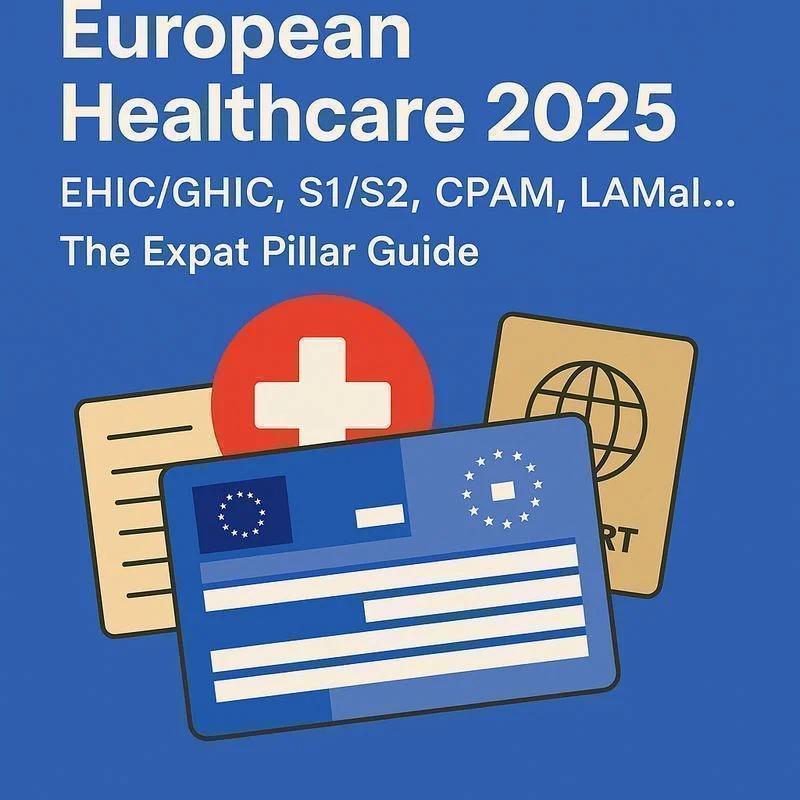
Heading abroad in Europe while keeping your health coverage intact is still a common concern for expats. In 2025, the rules around the European Health Insurance Card (EHIC / CEAM) have some updates and reminders worth knowing. This article will walk you — step by step — through what the card covers, how to renew it, and how to stay protected while traveling or on temporary stays.

The situation: why this card still matters

If you are an EU/EEA citizen or legally resident in an EU country, you can use the EHIC / CEAM when traveling in other member states. It allows you to receive medically necessary care under the same conditions as locals — not for long-term planned procedures.

But be careful: the card doesn't replace travel or private insurance — it doesn't cover private costs, repatriation, or non-urgent treatments.

Also, for UK cardholders, the EHIC must be checked, and in many cases replaced by the GHIC.

What to expect in 2025: rules & challenges

Validity & renewal: Check when your card expires and renew it in time.

Issuing time: In some countries, the card is mailed within 5 to 7 working days.

Provisional certificate: If you travel within 10 days and haven't gotten your new card yet, some states issue a provisional replacement (e.g. for three months).

Limited scope: EHIC only covers "medically necessary" treatment — definitions depend on each country's health system.

What to prepare: practical steps

1. Check your current EHIC / CEAM: note the expiry. If it's nearing expiration, start a renewal via your national health portal (for example, 'mon compte ameli' in France). Learn more about European healthcare systems for expats.

2. Apply early — ideally weeks before any trip — to avoid gaps in coverage.

3. If you leave soon: request a provisional certificate if your country offers it. Before traveling, check the new EES border requirements.

4. Keep a digital backup: a scanned copy or photo on your phone helps in emergencies.

5. Buy a supplemental travel/private insurance to cover what EHIC does not: repatriation, private care, etc.

6. When you use it on site: present the card to the local provider, ask for a complete receipt. You may pay upfront or a portion, depending on local rules, then claim reimbursement under your home scheme. For longer stays, see our guide to getting around Europe.

Concrete example: Suppose you live in Germany but travel for a week to France. You show your German EHIC at a French hospital, get treated, pay any local balance, then bring receipts home to Germany for reimbursement under German rates.

Frequently Asked Questions

Can I use EHIC for planned treatment abroad?

No — generally EHIC covers only medically necessary treatment during a temporary stay. Planned or non-urgent procedures are typically excluded. You must check the host country's health rules.

What if my EHIC expires right before a trip?

You should renew it right away. If your country issues a provisional certificate (e.g. valid for 3 months), request that to cover you while waiting for the new card.

Does EHIC cover private treatments or repatriation?

No — EHIC does not cover private care or repatriation. For those, supplemental travel or private insurance is essential.

Stay updated

For more practical insights on this topic, explore our related articles:

  • Your Health Insurance Stopped 6 Months Ago (You Just Don't Know It Yet)
  • The Peptide Craze Is Exploding in 2025 — What Expats in Europe Need to Know Before Crossing a Legal Line
  • What Really Happens When an Expat Gets Sick in Europe - and isn't Properly Registered
  • Winter 2025: Emergencies, Pharmacies, EHIC, LAMal, Health Cards — The Expat Winter Healthcare Guide

Conclusion: In short: the CEAM / EHIC remains a simple, trustworthy tool for getting essential care while traveling in Europe. But in 2025, it does require some foresight: check its validity, renew in time, and — importantly — don't rely on it for everything. Supplement it with travel or private insurance for full peace of mind. With that, you head off better equipped and more confident.

Stay Updated

1 tip per week, no spam.

About the author:

Jules Guerini is a European expat guide sharing practical, tested advice for navigating life abroad. From admin to housing to healthcare, he focuses on simple strategies that actually work. Contact: info@expatadminhub.com

Related posts

Your Health Insurance Stopped 6 Months Ago (You Just Don't Know It Yet)
Healthcare•January 8, 2026

Your Health Insurance Stopped 6 Months Ago (You Just Don't Know It Yet)

Your health coverage didn't end the day you moved. It ended quietly. Months ago. Everything looked fine. Your card was still in your wallet. No warnings arrived. Then came the doctor visit, the pharmacy bill, the reimbursement refusal. That's when you discovered the truth: **you've been uninsured for months**. This isn't negligence. It's how European health systems work. This article shows why coverage gaps hit thousands of expats, why no one warns you, and how you end up uninsured without ever deciding to be.

Read the article
The Peptide Craze Is Exploding in 2025 — What Expats in Europe Need to Know Before Crossing a Legal Line
Healthcare•December 21, 2025

The Peptide Craze Is Exploding in 2025 — What Expats in Europe Need to Know Before Crossing a Legal Line

Search trends in late 2025 tell a clear story: peptides, experimental therapies, and so-called ‘next-generation recovery compounds’ are exploding in popularity. Names like ‘Wolverine peptide’ circulate widely on social media, podcasts, and private groups, often framed as revolutionary shortcuts to healing, longevity, or performance. For expats living in Europe, this trend raises a far more serious question than effectiveness: what is actually legal, tolerated, or risky under European healthcare and regulatory systems? In 2025, misunderstanding this line can expose expats to medical, legal, and administrative consequences that few anticipate.

Read the article
What Really Happens When an Expat Gets Sick in Europe - and isn't Properly Registered
Healthcare•December 20, 2025

What Really Happens When an Expat Gets Sick in Europe - and isn't Properly Registered

For many expats, healthcare in Europe is one of the main reasons for moving. Universal coverage, strong public systems, and lower costs than in many other regions create a sense of safety. Yet this confidence hides a dangerous assumption: that being physically present in Europe automatically means being protected. In reality, healthcare access depends on administrative alignment, not geography. When expats fall ill before being properly registered, the experience can be deeply destabilising - financially, emotionally, and legally. This article explains what actually happens when things go wrong, why so many expats are unprepared, and how to avoid learning these lessons the hard way.

Read the article