
ExpatAdminHubEuropean expat guide
FR
Menu▾
HomePrivacyCookiesAboutContact
All guidesPreparationHousingFinanceHealthcareWorkFamily
ExpatAdminHubEuropean expat guide
HomePrivacyCookiesAboutContact
Categories
All guidesPreparation (checklists, visas, moving)Housing (rentals, utilities, neighborhoods)Finance (banking, taxes, budgeting)Healthcare (insurance, doctors, pharmacies)Work (jobs, contracts, work permits)Family (schools, childcare, family life)Culture (language, customs, integration)
FR

ExpatAdminHub

Practical guides for European expats navigating admin, housing, healthcare, and everyday life abroad.

Navigation

HomeAboutContactPrivacyTermsSitemap

Stay Updated

1 tip per week, no spam.

© 2026 ExpatAdminHub · European expat guide.
FR
  1. Home
  2. Blog
  3. Housing
  4. Short-Term Rental in France 2026: Meublé de Tourisme Obligations for Hosts
Short-Term Rental in France 2026: Meublé de Tourisme Obligations for Hosts
This article is also available in French.
Lire en français →

French rental law series

  • Rent by AL: app + web update
  • Tenant rights: deposit, repairs, proof
  • Non-resident landlord rental tax (2044)
  • LMNP furnished tax: micro-BIC vs réel
  • French bail lease: full guide
  • Landlord obligations: rent receipts
  • Free quittance template (legal guide)

Short-Term Rental in France 2026: Meublé de Tourisme Obligations for Hosts

Published June 27, 2026

Letting a furnished place on Airbnb, Booking or directly as a meublé de tourisme in France is no longer a grey-area side hustle — since the loi Le Meur (law no. 2024-1039 of 19 November 2024) it sits inside a tightening compliance frame: a registration number, a night cap on your primary residence, an energy-performance floor, a SIRET, the right micro-BIC bracket, and the taxe de séjour. Get one of those wrong and you risk a fine, a delisting, or a requalified tax position. This guide lays out, in plain English, exactly which obligations apply to a short-term host in 2026, where the rules changed, and how to check your own situation before your next booking. It is written for the individual host — an expat renting a second flat, a primary-residence owner letting a spare room or the whole place while away — not for professional operators or hotels. It is general information, not legal or tax advice.

Key facts

  • A registration number is becoming universal. The loi Le Meur lets every commune require a numéro d'enregistrement (déclaration en mairie) for short-term tourist lets, moving to a single national teleservice — declaring your meublé de tourisme is now the default first step, not the exception.
  • Your primary residence is capped at 120 nights a year of short-term letting nationally — and since the loi Le Meur communes may lower that to 90 nights by council vote. Platforms must block listings once the cap is reached.
  • Micro-BIC reform (2025 income): a classified meublé de tourisme keeps a 50% allowance up to €77,700; a non-classified one drops to a 30% allowance up to €15,000 (down from 50% / €77,700). Classification (1–5 stars) is now what makes the favourable bracket worth chasing.
  • The DPE now reaches tourist rentals. In communes with a changement d'usage regime, the loi Le Meur lets local authorities require a minimum energy class for meublés de tourisme — class E for new registrations, tightening toward 2034 — the same letting-ban logic that already governs long-term leases.
  • Taxe de séjour is per-night and must reach the commune. Booking platforms collect and remit it on most listings, but you stay responsible for declaring — and a registered/classified status changes the rate band.

1. What counts as a meublé de tourisme

A meublé de tourisme is a furnished dwelling rented to a passing clientele for short stays — by the day, week or month — where the guest does not make it their home (article L324-1-1 of the Code du tourisme). That covers the classic Airbnb/Booking listing, the seasonal coastal or ski let, and the spare room let to tourists. It is distinct from:

  • A long-term furnished lease (LMNP under a 1-year or 9-month student lease), where the tenant lives there as their main residence — different regime entirely, covered in our LMNP tax guide.
  • A chambre d'hôtes (bed & breakfast), where you live on site and provide breakfast and daily services — its own declaration and rules.
  • A hotel or para-hotelier activity, where you provide hotel-style services (reception, regular cleaning, linen, breakfast) — that tips you into a different tax and social-charge world.

The practical test is simple: if a guest books your furnished place for a holiday or a few nights and you provide little or no hotel service, you are running a meublé de tourisme — and the obligations below apply, whether you found the guest on a platform or through word of mouth.

2. The registration number — déclaration en mairie

The first obligation is to declare the property to your mairie and, in most communes, obtain a numéro d'enregistrement that must appear on every listing.

Until recently this requirement only existed in communes that had voted it in — Paris, most large cities, and tense-zone towns. The loi Le Meur generalises it: it gives every commune the power to require registration and moves the process toward a single national teleservice, so that declaring a meublé de tourisme becomes the default first step nationwide. The exact rollout date of the national portal is set by decree — check your own mairie's website for the current procedure, because a growing number now require the number before you can publish a single night.

Two things to get right:

  • Display the number. Once issued, the registration number must be shown on the Airbnb/Booking/Abritel listing. Platforms increasingly block or remove listings without one, and missing it is directly finable.
  • Declare the right status. The declaration distinguishes your primary residence (where you live at least 8 months a year) from a secondary residence or dedicated rental — that distinction drives the night cap and the changement d'usage rules in the next section.

For secondary residences in larger communes, a simple registration may not be enough — you may also need an authorisation de changement d'usage (below). Treat the mairie declaration as step one, not the whole story.

3. The night cap and changement d'usage

Two separate local controls decide how much, and whether, you can let short-term: the night cap on a primary residence, and the changement d'usage authorisation for everything else.

The 120 (now sometimes 90) night cap. If you let your primary residence as a meublé de tourisme, French law caps it at 120 nights per calendar year. The loi Le Meur now allows communes to lower that ceiling to 90 nights by deliberation — several have already moved. Platforms are required to enforce the cap: once you hit it, your listing is blocked for the rest of the year. Exceeding it (or mis-declaring a second home as a primary residence) is one of the most heavily fined breaches.

Changement d'usage for a secondary residence. If the property is not your primary residence, letting it short-term in a commune that operates a changement d'usage regime requires an authorisation to change the property's use from housing to tourist accommodation. This applies in Paris, the petite couronne, communes over 200,000 inhabitants, and any commune that has opted in. In the tightest zones the authorisation comes with a compensation rule — you must convert an equivalent surface of commercial space back into housing — which in practice makes a dedicated short-term let very hard to start. The loi Le Meur widened the communes that can impose these controls.

Why it matters before you list: registration, the night cap and changement d'usage are three different checks, set at commune level, and they change often. The night you cross a cap or list without an authorisation is the night you become finable — so confirm all three for your exact address, not your region.

Get the next rental guide before your neighbours do

We send one practical landlord/tenant tip per week — bail, ALUR, DPE, quittance. No spam, unsubscribe anytime.

4. The DPE and energy rules now applying

For years, short-term tourist rentals sat outside the energy-performance net that governs long-term leases. The loi Le Meur closes that gap.

In communes that operate a changement d'usage regime, local authorities can now require a meublé de tourisme to meet a minimum DPE class — broadly aligning tourist rentals with the décence-énergétique calendar that already bans the worst long-term lettings (class G since 2025, F from 2028, E from 2034). In practice the law sets an energy floor for new registrations (class E) that tightens over time, with a 2034 horizon that pushes toward class D in the regulated zones. The precise thresholds and dates are set by decree and by each commune, so the safe assumption for 2026 is: if your tourist rental is an energy sieve (F or G), expect it to be blocked or refused registration in a regulated commune, sooner rather than later.

This is the same logic landlords already face on the long-term side — and the reason a fresh, valid DPE is now part of the short-term host's file too, not just the seller's or the long-term landlord's. If you are weighing insulation or a heating swap, our DPE guide on greendailyfix walks through the class thresholds and the works that move the letter.

5. Tax: SIRET, micro-BIC and taxe de séjour

Short-term furnished letting is a commercial activity, taxed as BIC — not revenus fonciers. Three things follow.

You need a SIRET. Declaring the activity (now through the INPI guichet unique, formerly form P0i) registers you as a loueur en meublé and gives you a SIRET number. You need it to declare income and to be in order with the tax office — even as a non-professional (LMNP). It is free and a one-time step per activity.

Pick the right micro-BIC bracket — and consider classification. Since 2025 income, the loi Le Meur split the brackets:

  • Classified meublé de tourisme (officially graded 1–5 stars): 50% allowance, up to €77,700 of gross receipts.
  • Non-classified tourist rental: 30% allowance, up to €15,000 of gross receipts (down from 50% / €77,700).

That gap is large. For a host clearing more than a few thousand euros a year, getting the property classified (a one-off inspection by an accredited body, valid 5 years) often pays for itself in tax. Above the thresholds — or when real costs and amortisation beat the flat allowance — the régime réel (LMNP) applies; see the LMNP guide. Note the loi Le Meur also reintegrates amortisation into the capital gain when you eventually sell.

Collect and remit the taxe de séjour. Most communes levy a taxe de séjour per guest, per night. On platform bookings, Airbnb and the major platforms collect and remit it for you, but for direct bookings you collect and pay it to the commune yourself — and a classified status changes which rate band applies. You remain responsible for declaring, platform collection or not.

6. Copropriété, insurance and the practical file

Three more checks decide whether you can actually run the let — and sleep at night.

Your copropriété rules. If your flat is in a co-owned building, the règlement de copropriété can restrict or outright ban short-term tourist letting — a clause d'habitation bourgeoise exclusive typically prohibits it. The loi Le Meur went further: it made it easier for a copropriété to vote a ban on meublés de tourisme (a two-thirds majority) and obliges a host to inform the syndic when starting the activity. Read your règlement before you list; a neighbour complaint can end the activity fast.

Insurance. A standard propriétaire non-occupant or home policy usually does not cover short-term tourist letting. You need a policy that explicitly covers seasonal/short-term rental (guest damage, liability, sometimes loss of rent). Platforms' built-in cover (e.g. AirCover) is a backstop, not a substitute for a proper policy.

The document file. A compliant short-term host keeps, per property: the registration number, any changement d'usage authorisation, a valid DPE, the SIRET, the classification certificate (if classified), proof of taxe de séjour declarations, the insurance attestation, and an inventory of the furnished contents. Keeping that file generated and current is the difference between a five-minute response to a commune check and a scramble.

7. How to check your obligations and stay compliant

The hard part of short-term letting in 2026 is not any single rule — it is that the rules are set per commune, change often, and stack: registration, night cap, changement d'usage, DPE floor, SIRET, micro-BIC bracket, taxe de séjour, copropriété, insurance. Miss one and the others don't save you.

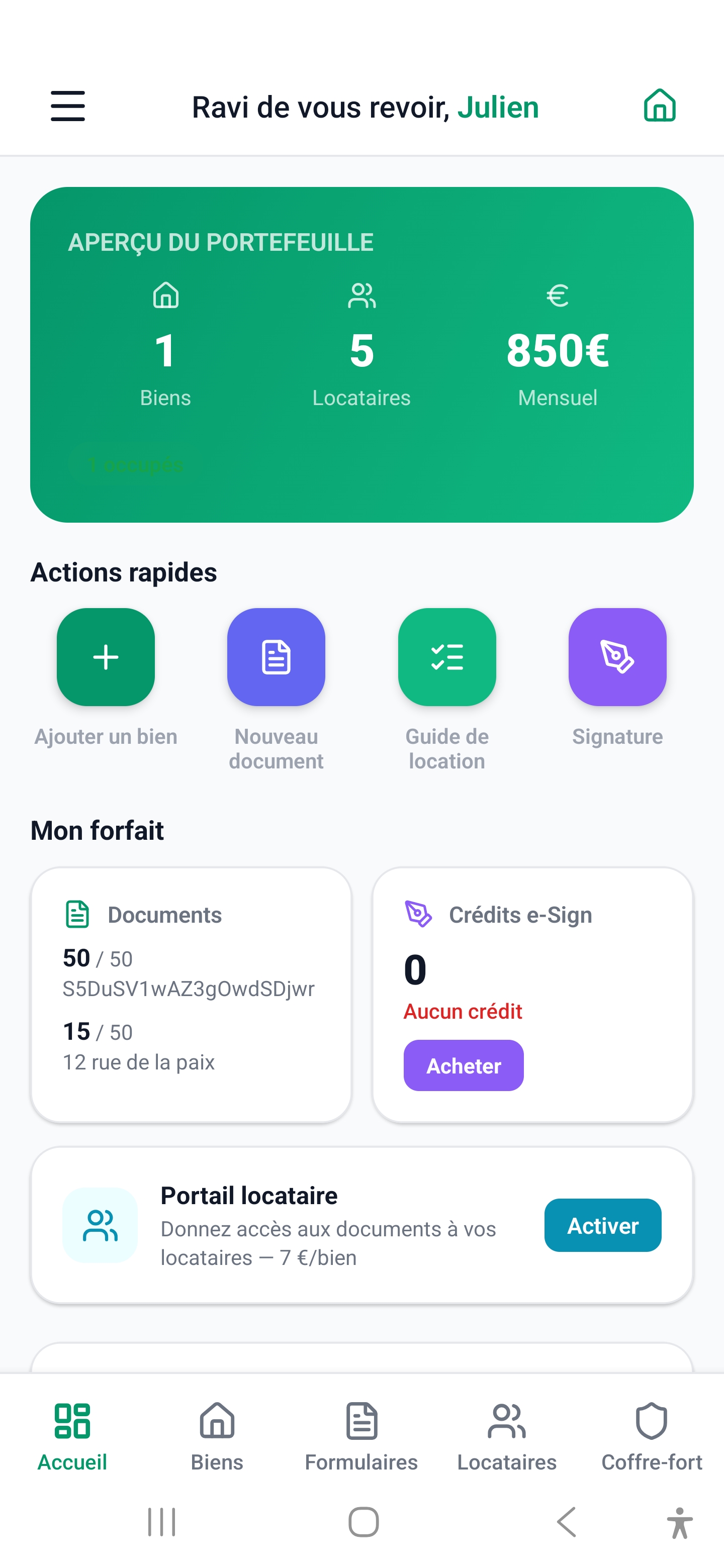
This is exactly what the Rent — Lease & Short-Term app and its web companion were rebuilt around. For short-term hosts it registers stays, generates per-stay guest invoices and taxe-de-séjour records, surfaces each property's micro-BIC classification (50% classé vs 30% non-classé) and flags the 120/90-night cap before you cross it.

And before any of that, you can run AdminLanding's free compliance check — no account needed, in English or French. It scores a property against its obligations in one glance: DPE letting-ban status, mandatory diagnostics, SIRET/LMNP, short-term registration and taxe de séjour, with email reminders before each deadline. Start there, confirm the commune-specific points (registration, night cap, changement d'usage) with your mairie, and let the app keep the file current. None of it replaces your mairie, your insurer or an accountant — it removes the friction of knowing what applies and proving you did it.

Frequently Asked Questions

Do I need a registration number to rent my place short-term in France?

In a growing majority of communes, yes. The loi Le Meur (law no. 2024-1039 of 19 November 2024) lets every commune require a numéro d'enregistrement obtained by declaration to the mairie, and moves the process toward a single national teleservice. Where required, the number must appear on every listing, and platforms block listings without one. Check your mairie's website for the exact current procedure at your address.

How many nights can I rent my primary residence on Airbnb?

Up to 120 nights per calendar year nationally. Since the loi Le Meur, communes may lower that ceiling to 90 nights by council deliberation, and several have. Platforms are required to enforce the cap — once you reach it, your listing is blocked for the rest of the year. Renting a secondary residence is not capped by nights but usually requires a changement d'usage authorisation instead.

What is the micro-BIC allowance for a meublé de tourisme in 2026?

Since 2025 income: a classified meublé de tourisme (officially graded 1–5 stars) keeps a 50% allowance up to €77,700 of gross receipts; a non-classified tourist rental gets a 30% allowance up to €15,000 (reduced from 50% / €77,700 by the loi Le Meur). Above the thresholds, or when actual costs and amortisation beat the flat allowance, the LMNP régime réel applies. Getting classified often pays for itself in tax once receipts exceed a few thousand euros.

Does a short-term rental need a DPE now?

Increasingly, yes. The loi Le Meur brings tourist rentals into the energy-performance net: in communes with a changement d'usage regime, a minimum DPE class can be required for meublés de tourisme — class E for new registrations, tightening toward 2034 — mirroring the décence-énergétique calendar that already bans class G (since 2025) and F (from 2028) long-term lettings. Thresholds and dates are set by decree and by each commune, so an F/G property should expect difficulty registering in a regulated zone.

Do I need a SIRET to rent a furnished property short-term?

Yes. Short-term furnished letting is a commercial (BIC) activity. Declaring it through the INPI guichet unique (formerly form P0i) registers you as a loueur en meublé and issues a SIRET, which you need to declare the income — even as a non-professional (LMNP). It is free and a one-time step. A SIRET is not the same as becoming a professional landlord (LMP), which is a separate threshold.

Who pays the taxe de séjour — me or the platform?

The guest pays it, per night; you (or the platform) collect and remit it to the commune. On bookings made through Airbnb and the major platforms, the platform collects and remits the taxe de séjour automatically. For direct bookings you collect and pay it yourself. A classified status can change which rate band applies. Either way, you remain responsible for declaring the activity correctly.

Stay updated

For more practical insights on this topic, explore our related articles:

  • Tenant Rights in France: Deposit, Repairs & the Written Proof That Wins Disputes
  • Rent by AdminLanding: Big 2026 Update for French Landlords
  • Non-Resident Landlord French Rental Tax: The 2026 Declaration Guide (2044 / 2042)
  • LMNP Furnished Rental Tax 2026: Micro-BIC vs Régime Réel Explained

Tool by AdminLanding

Manage your French rental in English, from your phone

Rent — Lease & Short-Term generates ALUR-compliant leases, rent receipts, digital états des lieux and 23 rental documents — long-term AND short-term / meublé de tourisme — plus a per-property compliance check (DPE letting-ban, mandatory diagnostics, SIRET/LMNP, short-term registration, taxe de séjour) with email reminders — eIDAS e-signature, bilingual FR/EN. First property free — 10 documents included, then €49/property (50 documents), €39 each additional. No subscription.

Get Rent — Lease & Short-Term

Conclusion: Short-term letting in France in 2026 is still very doable — but it is now a compliance activity, not a casual one. The loi Le Meur pulled the threads together: a registration number heading toward universal, a 120-night cap your commune can cut to 90, a DPE floor reaching tourist rentals, a sharper micro-BIC split that rewards classification, and the long-standing SIRET, taxe de séjour, copropriété and insurance duties on top. None of it is hard individually; the risk is in missing one. Confirm the commune-specific points with your mairie, get classified if your receipts justify it, keep a clean per-property file — and use AdminLanding's free compliance check to see where you stand before your next booking. This guide is general information, not legal or tax advice; confirm your situation with your mairie and a French professional.

Tool by AdminLanding

Manage your French rental in English, from your phone

Rent — Lease & Short-Term generates ALUR-compliant leases, rent receipts, digital états des lieux and 23 rental documents — long-term AND short-term / meublé de tourisme — plus a per-property compliance check (DPE letting-ban, mandatory diagnostics, SIRET/LMNP, short-term registration, taxe de séjour) with email reminders — eIDAS e-signature, bilingual FR/EN. First property free — 10 documents included, then €49/property (50 documents), €39 each additional. No subscription.

Get Rent — Lease & Short-Term→

Stay Updated

1 tip per week, no spam.

About the author:

Julien Maurice is the founder of AdminLanding and writes the editorial guides on ExpatAdminHub covering European expat life, France-Switzerland cross-border work, and French administrative procedures. Contact: [email protected]

Related posts

Tenant Rights in France: Deposit, Repairs & the Written Proof That Wins Disputes
Housing•June 8, 2026

Tenant Rights in France: Deposit, Repairs & the Written Proof That Wins Disputes

If you rent in France, three searches probably brought you here: "landlord won't return deposit France", "how to force my landlord to do repairs", or "my landlord is ignoring my move-out notice." These are the most common — and most stressful — tenancy disputes, and they all share one quiet truth: the tenant who has a dated, written, provable record almost always wins. French rental law (the Loi n°89-462 du 6 juillet 1989) is genuinely protective of tenants, but the law only helps you if you can prove what happened and when. As a non-French-speaking expat, that paper trail matters even more — a clear, traceable record of every request closes the door on "I never received that" and "you never asked." This guide walks through getting your dépôt de garantie back, forcing repairs your landlord is dodging, giving notice correctly, and using the état des lieux as evidence — and shows the simplest way to keep all of it in one provable place.

Read the article
Rent by AdminLanding: Big 2026 Update for French Landlords
Housing•June 8, 2026

Rent by AdminLanding: Big 2026 Update for French Landlords

If you own a flat or house in France and you do the paperwork yourself — often from another country — you already know the real work isn't the rent, it's the bail, the monthly quittance de loyer, the état des lieux, the deposit, and the slow drip of compliance deadlines nobody reminds you about. Rent by AdminLanding (store name Rent — Lease & Short-Term in English, Rent — Bail & Courte Durée in French) just shipped its biggest update yet across both its mobile apps (iPhone + Android) and its web back-office at adminlanding.com — and the headline for non-resident and expat landlords is simple: you can now run a French rental end-to-end — long-term lease or short-term / Airbnb (meublé de tourisme) — in English or French, from a phone in London or a laptop in New York, without paying an agency 6–10% to do it for you. The two standout additions: a per-property compliance check that scores every legal obligation (DPE letting-ban, diagnostics, SIRET, short-term registration, taxe de séjour) at a glance, and a "which document do I need?" finder that maps your situation to the right one of 23 templates. This is a what's-new guide: what the update added, what each surface now does, and what it costs (the first property is free).

Read the article
Non-Resident Landlord French Rental Tax: The 2026 Declaration Guide (2044 / 2042)
Housing•May 15, 2026

Non-Resident Landlord French Rental Tax: The 2026 Declaration Guide (2044 / 2042)

If you live abroad and rent out a property in France, France taxes that rental income — wherever you are tax-resident. The rules that trip up non-resident landlords are specific: which form to file, the 20% minimum rate, the social-levy rate that depends on your health-insurance country, and the tax treaty that stops you being taxed twice. This guide walks through the 2026 declaration end to end, for unfurnished rentals taxed as revenus fonciers. (Furnished rentals follow the separate [LMNP/BIC rules](/en/blog/2026-05-13-lmnp-furnished-rental-tax-micro-bic-vs-reel-guide).)

Read the article