
ExpatAdminHubEuropean expat guide
FR
Menu▾
HomePrivacyCookiesAboutContact
All guidesPreparationHousingFinanceHealthcareWorkFamily
ExpatAdminHubEuropean expat guide
HomePrivacyCookiesAboutContact
Categories
All guidesPreparation (checklists, visas, moving)Housing (rentals, utilities, neighborhoods)Finance (banking, taxes, budgeting)Healthcare (insurance, doctors, pharmacies)Work (jobs, contracts, work permits)Family (schools, childcare, family life)Culture (language, customs, integration)
FR

ExpatAdminHub

Practical guides for European expats navigating admin, housing, healthcare, and everyday life abroad.

Navigation

HomeAboutContactPrivacyTermsSitemap

Stay Updated

1 tip per week, no spam.

© 2026 ExpatAdminHub · European expat guide.
FR
  1. Home
  2. Blog
  3. Finance
  4. EU Banking Shock 2025: New KYC, Account Freezes & Cross-Border Transfers — The Expat Guide
EU Banking Shock 2025: New KYC, Account Freezes & Cross-Border Transfers — The Expat Guide

EU Banking Shock 2025: New KYC, Account Freezes & Cross-Border Transfers — The Expat Guide

Published December 5, 2025

2025 is the year European banks tighten everything. New KYC rules, automatic address checks, temporary account freezes when data does not match, stronger cross-border transfer monitoring and less tolerance for unverified foreign IBANs. Expats are directly affected. This guide explains what is changing, why it is happening now and how to stay safely on the right side of the system.

1) Why this banking shock in 2025?

From the bank’s point of view, 2025 is the moment when several slow trends finally collide.

Three main forces are pushing banks to tighten controls:

  • Stronger EU and national supervision after high-profile money-laundering cases.
  • Rapid growth of fintech providers that forces traditional banks to upgrade their systems.
  • Record volumes of cross-border payments, for example CHF salaries converted to EUR, pensions paid from the UK and online investments or remittances.

Previous guides on this site such as Europe’s expat banking shake-up 2025 and Expat banking 2025: hidden fees and IBAN rules described the big picture. This new article focuses on what the 2025 KYC wave and monitoring changes mean in practice for your everyday accounts.

2) KYC 2025: automated checks, less human tolerance

Know Your Customer checks were already part of banking, but 2025 brings a shift to far more automated reviews.

Typical changes you will see:

  • Automatic comparison between your declared address, proof of address and sometimes public data.
  • More systematic requests for evidence of real residence, such as a rental contract, utility bill, school certificate or social-security registration.
  • Shorter deadlines to update ID, residence cards and contact details, often between 30 and 90 days after each change.

In practice a current account can be frozen within 24 to 48 hours if one document is missing, blurry or inconsistent. The system does not try to guess intent: when something looks off, it freezes first and asks questions later.

To see how these checks connect with instant payments and IBAN rules, you can read EU banking 2025: IBAN, SEPA Instant and expat strategies alongside this guide.

3) Account freezes: why expats are over-represented

From a bank compliance engine’s perspective, many expats look riskier than they really are:

  • Addresses change more often, sometimes across several countries in a few years.
  • It is common to hold multiple accounts at once: a local bank, one or two fintechs, a home-country bank and sometimes a Swiss account.
  • Regular cross-border transfers in several currencies are the norm rather than the exception.

Combined, these factors are enough to trigger risk flags and extra reviews, even if every euro is legitimate.

Temporary freezes usually come from one of three sources:

  • An address that no longer matches incoming payments, card usage or official records.
  • KYC documents that have expired or were never uploaded in the right format.
  • Unusual flows to or from countries seen as more sensitive or complex.

If you are a cross-border worker or remote employee, your profile can look particularly busy. The guide France–Switzerland cross-border workers shows concrete banking architectures that reduce these frictions.

4) Cross-border transfers: new frictions and how to adapt

Transfers between countries remain possible, but banks now expect more context.

In day-to-day life this often means:

  • Clearer, mandatory descriptions for the purpose of payment, for example salary, rent, family support, savings, tuition or business.
  • Extra checks for transfers above roughly 1 000 to 1 500 euros arriving from outside the European Union.
  • Automatic questions or temporary holds when repeated payments go to Switzerland or the United Kingdom without a stable explanation.

A simple habit for expats is to use consistent, explicit labels such as Swiss salary, Rent Lyon or Family support Portugal instead of vague one-word descriptions.

For worked examples of transfers and currency-conversion costs you can combine this article with International money transfers from France 2025 and the broader overview in Europe’s expat banking shake-up 2025.

5) Foreign IBANs: less tolerance, more enforcement

On paper any SEPA-area IBAN should be treated like a local one for euro payments. In reality, some landlords, energy providers and mobile operators still refuse German, Lithuanian or Belgian IBANs issued by digital banks.

Regulators are tightening the screws in 2025:

  • Companies that reject a valid SEPA IBAN without justification face faster and higher fines.
  • Banks are pushed to track IBANs that do not match the customer’s declared residence, for example a foreign IBAN used for what looks like a purely domestic profile.
  • Platforms such as IBANDiscrimination.eu give consumers a structured way to report illegal refusals.

For expats this creates a double requirement: you need to be ready to defend your rights when a provider refuses your IBAN, while also keeping a banking setup that still looks coherent from a compliance point of view. The guides Expat banking 2025 and EU banking 2025 go deeper into the legal framework and practical examples.

6) How to lower your risk of freezes in 2025

The good news is that a lot of the risk can be reduced with a few simple habits, especially if you act before problems appear.

Practical steps:

  • Update your address and contact details with every bank as soon as you move, not six months later.
  • Scan your passport, residence card, proof of address and, where relevant, proof of income.
  • Create a dedicated digital folder for KYC in your cloud drive and store all documents there.
  • Warn your main bank when you change country, job status or the volume of transfers.

This KYC folder fits naturally into a wider admin system. If you follow the 2025 year-end checklist for expats in Europe, you can plug it straight into the Banking and ID sections of your master admin folder.

7) An optimal banking architecture for expats in 2025

Rather than searching for a single perfect bank, it is usually more effective to design a simple, layered architecture.

For many expats a resilient setup looks like this:

  1. One local account in your country of residence for salary, rent, utilities and taxes.
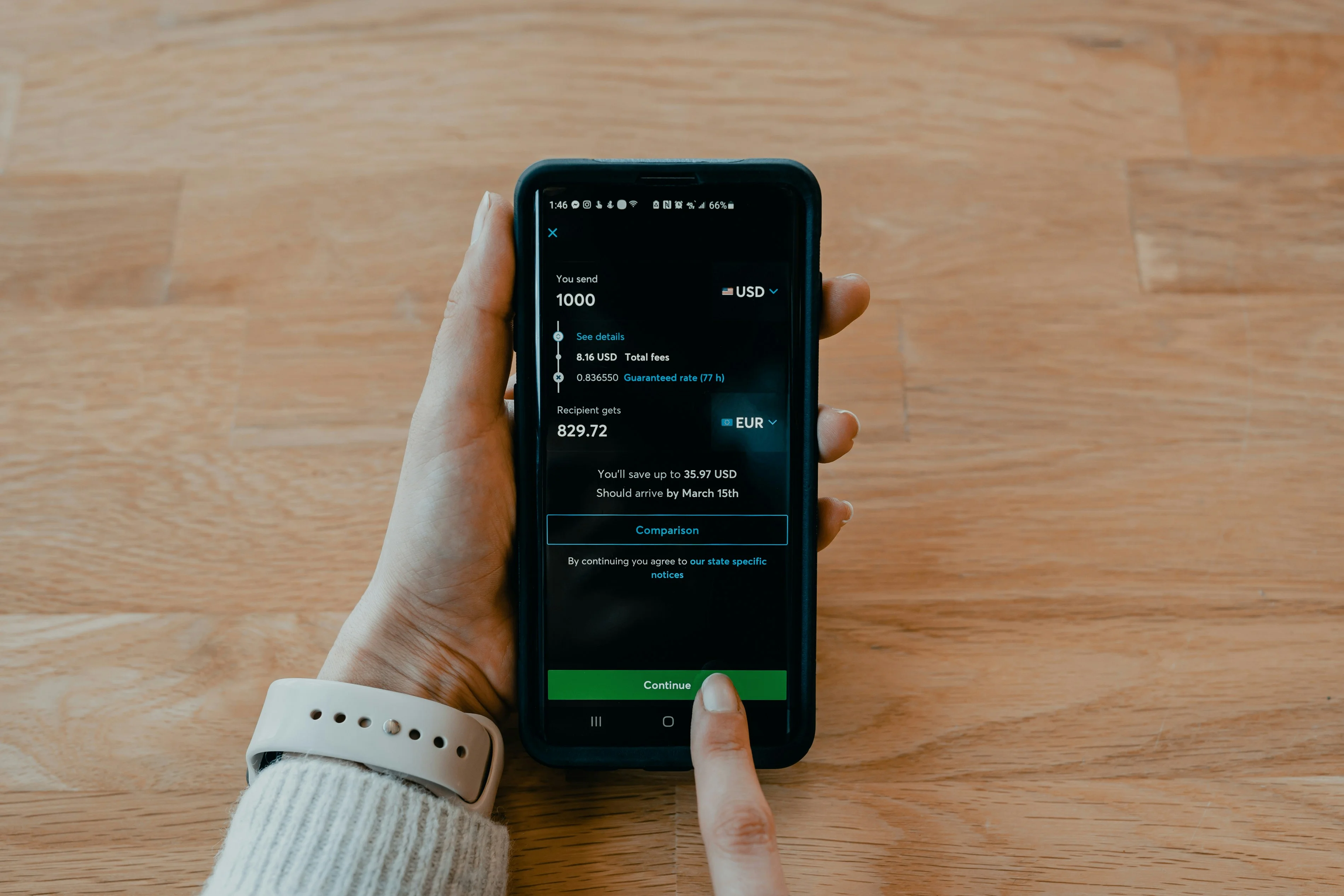
  2. One multi-currency account with a specialist provider such as Wise, Revolut or N26 to manage conversions between EUR, CHF, GBP, USD and other currencies.
  3. One separate savings or investment account so that long-term goals are not mixed with daily spending.
  4. One up-to-date digital KYC folder that you can access quickly if a bank asks for documents again.

This architecture connects well with existing guides on this site about expat banking and cross-border work, especially Best banks for expats in Europe 2025 and Best banks for expats 2025. The goal is not to multiply accounts forever, but to keep a small, clear set where each piece has a precise role.

Frequently Asked Questions

Why would my account freeze if I did nothing wrong?

Because the system is automated. Missing or inconsistent documents are treated as risk until proven otherwise, so the account can be frozen while the bank waits for you to upload the right evidence.

Stay updated

For more practical insights on this topic, explore our related articles:

  • Furnished or Unfurnished? The Tax & Lease Decision for Foreign French Property Owners (2026)
  • Becoming a French Landlord as a Non-Resident: First-Year Tax & Admin Setup (2026)
  • French Tax Declaration 2026: Step-by-Step Guide for Expats (Déclaration de Revenus)
  • Swiss Second Pillar (LPP/BVG): Complete Retirement Guide for Cross-Border Workers

Tools by AdminLanding

Make French admin and rentals easier

AdminLanding builds two tools used by expats in France: Rent (mobile rental management with ALUR leases & e-signature) and Guide (AI assistant for 25+ government sites). Pick the one that fits.

See AdminLanding tools

Conclusion: The 2025 banking shift is not a financial crisis, but it is a real change in how banks read your profile. For expats, it can create unexpected problems if addresses, documents and transfers look messy from the outside. By organising your KYC folder, keeping your data aligned and building a clear banking architecture, you can stay safely on the right side of the system.

Tools by AdminLanding

Make French admin and rentals easier

AdminLanding builds two tools used by expats in France: Rent (mobile rental management with ALUR leases & e-signature) and Guide (AI assistant for 25+ government sites). Pick the one that fits.

See AdminLanding tools→

Stay Updated

1 tip per week, no spam.

About the author:

Julien Maurice is the founder of AdminLanding and writes the editorial guides on ExpatAdminHub covering European expat life, France-Switzerland cross-border work, and French administrative procedures. Contact: [email protected]

Related posts

Furnished or Unfurnished? The Tax & Lease Decision for Foreign French Property Owners (2026)
Finance•May 4, 2026

Furnished or Unfurnished? The Tax & Lease Decision for Foreign French Property Owners (2026)

Most foreign owners of French rental property face the furnished-versus-unfurnished question once and resolve it from intuition: furnished feels easier ("I can keep my own things in there"), unfurnished feels more committed. The tax and lease consequences of that intuition are larger than most owners realise, and they cut in opposite directions. Furnished sits under the BIC regime (Bénéfices Industriels et Commerciaux) with the LMNP statute — a commercial-income tax frame that allows building amortissement large enough to drive taxable rental income close to zero in the early years. Unfurnished sits under revenus fonciers with simpler accounting but no amortissement, and a 3-year lease with a more stable tenant. The choice is irreversible only in one direction (opting out of micro-foncier into régime réel binds you for 3 years; the reverse is automatic). This guide walks through the tax math, the lease-duration trade-off and the operational footprint each path produces, framed for foreign owners specifically — where the choice is made remotely, often without a French accountant, and where the wrong default can cost meaningful tax efficiency every year for the life of the lease.

Read the article
Becoming a French Landlord as a Non-Resident: First-Year Tax & Admin Setup (2026)
Finance•May 2, 2026

Becoming a French Landlord as a Non-Resident: First-Year Tax & Admin Setup (2026)

Owning a rental property in France while living outside it puts you in the most-misunderstood corner of the [French tax system](/en/blog/2026-04-19-declaration-revenus-france-expats-guide-2026). The rental income is French-source, which means France taxes it regardless of where you live (Article 164 B of the Code Général des Impôts). But you are a non-résident fiscal — and that single status changes which tax office you write to, which forms you file, the minimum rate applied to your French income, whether 17.2% in social contributions also apply, and whether you need a fiscal representative. This guide walks foreign-national French property owners through the first-year setup: who you are in the eyes of the FISC, where to register, what you'll file every May, and the specific traps that trip up first-time non-resident landlords. Sources at every step are official: legifrance, impots.gouv.fr, the Bulletin Officiel des Finances Publiques (BOFiP), and ANIL.

Read the article
French Tax Declaration 2026: Step-by-Step Guide for Expats (Déclaration de Revenus)
Finance•April 19, 2026

French Tax Declaration 2026: Step-by-Step Guide for Expats (Déclaration de Revenus)

Tax season is live in France right now. Online filing on impots.gouv.fr opened on 9 April 2026, and the first deadlines hit in just over a month — paper returns by 19 May, and online returns staggered from 21 May to 4 June depending on your département. For expats, this is never a routine exercise: beyond the main formulaire 2042, you likely need the 2047 for foreign income, the 3916 for foreign bank accounts (€1,500 fine per missed account), and critical boxes like 1AF/1BF for foreign salary and 8TK for the credit d'impôt that prevents double taxation. First-year filers face the steepest learning curve because the tax office sends no reminder email if you haven't yet created an espace particulier. This guide walks through every stage — who must file, which forms apply, how to navigate impots.gouv.fr screen by screen, and how to avoid the five mistakes that cost expats hundreds of euros every year. If you've been putting this off, now is the week to act.

Read the article