

ExpatAdminHubEuropean expat guide
FR
Menu▾
HomePrivacyCookiesAboutContact
All guidesPreparationHousingFinanceHealthcareWorkFamily
ExpatAdminHubEuropean expat guide
HomePrivacyCookiesAboutContact
Categories
All guidesPreparation (checklists, visas, moving)Housing (rentals, utilities, neighborhoods)Finance (banking, taxes, budgeting)Healthcare (insurance, doctors, pharmacies)Work (jobs, contracts, work permits)Family (schools, childcare, family life)Culture (language, customs, integration)
FR

ExpatAdminHub

Practical guides for European expats navigating admin, housing, healthcare, and everyday life abroad.

Navigation

HomeAboutContactPrivacyTermsSitemap

Stay Updated

1 tip per week, no spam.

© 2026 ExpatAdminHub · European expat guide.
FR
  1. Home
  2. Blog
  3. Finance
  4. Swiss Second Pillar (LPP/BVG): Complete Retirement Guide for Cross-Border Workers
Swiss Second Pillar (LPP/BVG): Complete Retirement Guide for Cross-Border Workers
This article is also available in French.
Lire en français →

Franco-Swiss cross-border series

  • Permit G: the complete guide
  • LAMal vs CMU: which health cover?

Swiss Second Pillar (LPP/BVG): Complete Retirement Guide for Cross-Border Workers

Published April 3, 2026·Updated April 11, 2026

If you work in Switzerland as a frontalier, a significant portion of your salary is automatically invested in the second pillar — Switzerland's occupational pension system (LPP/BVG). Understanding how it works, how much you contribute, and what happens when you leave Switzerland or retire is essential for long-term financial planning. Yet most cross-border workers barely know what is in their pension account.

Key facts

  • The Swiss pension system is built on three pillars: AVS/AHV (1st, mandatory state), LPP/BVG (2nd, occupational, mandatory above CHF 22,680/year) and Pillar 3a (voluntary, up to CHF 7,258/year deductible).
  • LPP contributions are split between employer and employee — the employer must fund at least 50% — and rise with age, from 7% at 25–34 to 18% at 55–65 of the coordinated salary.
  • If you move to France, the mandatory LPP portion must stay in Switzerland on a vested-benefits account (compte de libre passage) since the 2007 EU/EFTA bilateral rule; only the surobligatoire can be paid in cash.
  • Swiss withholding tax on lump-sum withdrawals runs roughly 5–11% by canton, but France taxes the pension under Article 21 of the Franco-Swiss treaty plus 17.2% CSG/CRDS on the gross amount.
  • The AdminLanding Cross-Border Pack (€29) includes tools to read your certificat de prévoyance and project combined French + Swiss retirement income.

The Swiss three-pillar pension system

Switzerland's retirement system rests on three pillars:

• 1st Pillar — AVS/AHV (Assurance-Vieillesse et Survivants): State pension. Mandatory for all workers. Funded by employer and employee contributions (5.3% each of gross salary in 2026). Provides a basic retirement income of CHF 1,260–2,520/month (2026 rates).

• 2nd Pillar — LPP/BVG (Loi sur la Prévoyance Professionnelle): Occupational pension. Mandatory for employees earning above CHF 22,680/year (2026 threshold). Funded jointly by employer and employee. This is the focus of this article.

• 3rd Pillar — 3a/3b: Voluntary private savings. Tax-advantaged (Pillar 3a allows deductions up to CHF 7,258/year for employees with a 2nd pillar, 2026 cap). Not mandatory.

As a cross-border worker, you contribute to the 1st and 2nd pillars automatically. The 3rd pillar is available to frontaliers under certain conditions (varies by canton and personal tax situation).

How the second pillar works

The LPP (Loi fédérale sur la prévoyance professionnelle, RS 831.40) requires your Swiss employer to enroll you in a pension fund (caisse de pension / Pensionskasse).

Key mechanics:

• Insured salary: The portion of your salary between the coordination deduction (CHF 25,725 in 2026) and the upper limit (CHF 88,200). This is called the coordinated salary (salaire coordonné).

• Contributions: Split between employer and employee — the employer must pay at least 50%. Total contribution rates increase with age:

— Age 25–34: 7% of coordinated salary

— Age 35–44: 10%

— Age 45–54: 15%

— Age 55–64/65: 18%

• Capital accumulation: Contributions go into an individual retirement account within the fund. The minimum interest rate is set annually by the Federal Council (currently 1.25% in 2026).

• Over-mandatory coverage (surobligatoire): Many employers offer plans that exceed LPP minimums — higher insured salaries, higher contribution rates, better interest. Check your pension certificate (certificat de prévoyance) for details.

• Risk benefits: The 2nd pillar also covers disability (invalidité) and death (survivants) — providing a pension to your spouse/children if you die or become disabled during employment.

Your pension certificate: how to read it

Every year, your pension fund sends a certificat de prévoyance (Vorsorgeausweis). This is the most important financial document most frontaliers never read. Key fields:

• Avoir de vieillesse (retirement assets): Your total accumulated capital, including employer/employee contributions plus interest

• Prestation de libre passage (vested benefits): The amount you would receive if you left the fund today — typically equals your retirement assets

• Rente de vieillesse projetée (projected retirement pension): Estimated annual pension at age 64/65 based on current contribution trajectory

• Capital de décès / rente de survivant: Death benefit / survivor pension for your family

• Rente d'invalidité: Disability pension amount

• Rachats possibles (possible buy-ins): The maximum additional voluntary contribution you can make to reduce gaps in your pension history

The AdminLanding Cross-Border Pack (€29) includes guidance on reading your pension certificate and understanding your projected retirement income across Swiss and French systems.

Franco-Swiss frontalier updates in your inbox

One email per week on permit G, LAMal, LPP, tax at source and the stuff nobody warns you about. Unsubscribe anytime.

What happens when you leave Switzerland?

When you stop working in Switzerland (job change, retirement, return to France), your 2nd pillar capital follows specific rules:

Scenario 1 — New Swiss employer: Your capital is automatically transferred to your new employer's pension fund. No action needed.

Scenario 2 — Leaving Switzerland for an EU/EFTA country (e.g., France):

• The mandatory portion (LPP minimum) must remain in Switzerland. It is transferred to a vested benefits account (compte de libre passage) at a bank or insurance company of your choice.

• The over-mandatory portion (surobligatoire) can be withdrawn as a lump sum cash payment, subject to Swiss withholding tax (varies by canton, typically 5–11%).

• Since 1 June 2007 (following EU bilateral agreements), the mandatory portion cannot be paid out in cash if you move to an EU/EFTA country where you are covered by a compulsory pension system.

Scenario 3 — Retirement: At age 64 (women) / 65 (men), you can choose:

• Monthly pension (rente): Calculated as retirement capital × conversion rate (currently 6.8% for the mandatory part, lower for surobligatoire)

• Lump sum (capital): Withdraw all or part of your 2nd pillar as cash

• Combination: Part pension, part capital — if your fund's rules allow it

Scenario 4 — Home purchase: You can withdraw 2nd pillar capital to buy your primary residence (also for frontaliers buying in France), subject to conditions.

Taxation of second pillar benefits

In Switzerland:

• Lump sum withdrawals are taxed separately at a reduced rate by the canton where the fund is domiciled (not your canton of work). Rates range from about 5% to 11% depending on the canton and the amount.

• Monthly pensions are taxed as income.

In France (for frontaliers):

• Under the Franco-Swiss tax convention (Article 21), pension income paid from Switzerland to a French resident is generally taxable in France.

• Lump sum withdrawals: France taxes them as exceptional income. You can request the système du quotient (income averaging) to reduce the marginal rate.

• The Swiss withholding tax on lump sum withdrawals can generally be reclaimed (refunded) via a request to the Swiss tax authority, since France has the taxing right under the convention.

• Social charges: French residents pay 17.2% prélèvements sociaux (CSG/CRDS) on Swiss pension income — this is often overlooked and can represent a significant cost.

Key tip: The interaction between Swiss withholding tax and French income tax on 2nd pillar withdrawals is complex. Plan withdrawals strategically — timing and method (pension vs capital vs split) can save tens of thousands of euros over a retirement.

Voluntary buy-ins (rachats) and third pillar

Buy-ins (rachats LPP):

• If you have gaps in your 2nd pillar history (e.g., years abroad, salary increases), you can make voluntary additional contributions (rachats) up to the maximum shown on your pension certificate.

• Buy-ins are fully tax-deductible from your Swiss taxable income — one of the most powerful tax optimisation tools available to frontaliers taxed in Geneva.

• You cannot withdraw bought-in capital for 3 years after the buy-in (anti-abuse rule).

Third Pillar 3a:

• The 3rd pillar is a voluntary tax-advantaged savings vehicle. Maximum annual contribution: CHF 7,258 (2026) for employees with a 2nd pillar.

• For frontaliers taxed in Geneva, 3a contributions are deductible from Swiss income tax — highly advantageous.

• For frontaliers taxed in France (other cantons), the 3a deductibility depends on your specific tax situation.

• At withdrawal, 3a capital is taxed similarly to 2nd pillar lump sums.

Coordinating Swiss and French retirement

As a frontalier, you accumulate retirement rights in both systems simultaneously:

• Swiss side: AVS (1st pillar) + LPP (2nd pillar) + optional 3a (3rd pillar)

• French side: If you previously worked in France, you may have trimestres (quarters) in the French system (Assurance Retraite / AGIRC-ARRCO)

Under EU Regulation 883/2004, your contribution periods in both countries are totalisable — meaning French quarters count toward Swiss eligibility thresholds and vice versa. However, each country pays only for its own contribution periods.

Practical steps before retirement:

• Request a relevé de carrière from the French system (info-retraite.fr) and a pension projection from your Swiss fund

• Consider the optimal timing — Swiss retirement age (64/65) may differ from French (currently 64 with the 2023 reform)

• Plan the order of withdrawals: Swiss lump sum first, then French pension? Or both simultaneously?

• Account for currency risk: your Swiss pension is in CHF, French pension in EUR

The AdminLanding Cross-Border Pack includes a retirement coordination module that helps you project combined income from both systems and plan withdrawal strategies.

Frequently Asked Questions

Can I withdraw my second pillar when I move back to France?

Only the over-mandatory (surobligatoire) portion can be withdrawn as cash. The mandatory LPP portion must stay in a Swiss vested benefits account until you reach retirement age, because France has a compulsory pension system (EU bilateral agreement rule).

How much is in my second pillar?

Check your annual pension certificate (certificat de prévoyance) from your employer's pension fund. The 'avoir de vieillesse' field shows your total accumulated capital. If you have lost track, contact your pension fund or the Swiss Vested Benefits Foundation (Fondation institution supplétive LPP).

Are my second pillar contributions tax-deductible?

Regular contributions are automatically deducted pre-tax from your salary. Voluntary buy-ins (rachats) are also fully deductible from Swiss taxable income — particularly valuable for frontaliers taxed at source in Geneva.

What happens to my second pillar if I die?

Your surviving spouse receives a survivor's pension (rente de survivant) — typically 60% of the projected retirement pension. Children under 18 (or 25 if in education) receive an orphan's pension. If no survivors, the capital reverts to the pension fund.

What happens to my 2nd pillar if I stop being a frontalier before retirement?

If you stop working in Switzerland, your accrued 2nd pillar assets are transferred to a vested benefits account (compte de libre passage). The funds stay invested until you reclaim them at retirement, take a cash withdrawal if you leave Switzerland permanently, or use them for a qualifying life event.

Can I withdraw my 2nd pillar early to buy a home in France?

Yes, under the home ownership promotion rules (encouragement a la propriete du logement - EPL). You can withdraw part of your 2nd pillar to purchase, build, or renovate your primary residence. The withdrawn amount is taxable in France as Swiss pension income.

Is the Swiss 2nd pillar taxable in France when I retire?

Yes. Under the Franco-Swiss tax treaty, pension lump sums from the Swiss 2nd pillar are taxable in France for French residents, but at a reduced rate due to treaty provisions. Monthly pensions follow standard French pension taxation. A French tax advisor should review your specific situation before withdrawal.

Stay updated

For more practical insights on this topic, explore our related articles:

  • French Tax Declaration 2026: Step-by-Step Guide for Expats (Déclaration de Revenus)
  • French Tax System for Expats: First Year, Partial Year, and Cross-Border Income Explained
  • Wake Up to a Frozen Bank Account: The 8-Month Expat Trap Nobody Warns You About
  • January 1st Changed Your Tax Rate (Your Payslip Won't Tell You Until February)

Tools by AdminLanding

Make French admin and rentals easier

AdminLanding builds two tools used by expats in France: Rent (mobile rental management with ALUR leases & e-signature) and Guide (AI assistant for 25+ government sites). Pick the one that fits.

See AdminLanding tools

Conclusion: The Swiss second pillar is one of the most valuable financial assets a frontalier builds over their career — yet it is also one of the least understood. Knowing your contribution rates, reading your pension certificate, understanding withdrawal rules, and planning the tax-efficient coordination of Swiss and French retirement income can make a difference of tens of thousands of euros. Start planning now, not at 63.

Tools by AdminLanding

Make French admin and rentals easier

AdminLanding builds two tools used by expats in France: Rent (mobile rental management with ALUR leases & e-signature) and Guide (AI assistant for 25+ government sites). Pick the one that fits.

See AdminLanding tools→

Stay Updated

1 tip per week, no spam.

About the author:

Julien Maurice is the founder of AdminLanding and writes the editorial guides on ExpatAdminHub covering European expat life, France-Switzerland cross-border work, and French administrative procedures. Contact: [email protected]

Related posts

French Tax Declaration 2026: Step-by-Step Guide for Expats (Déclaration de Revenus)
Finance•April 19, 2026

French Tax Declaration 2026: Step-by-Step Guide for Expats (Déclaration de Revenus)

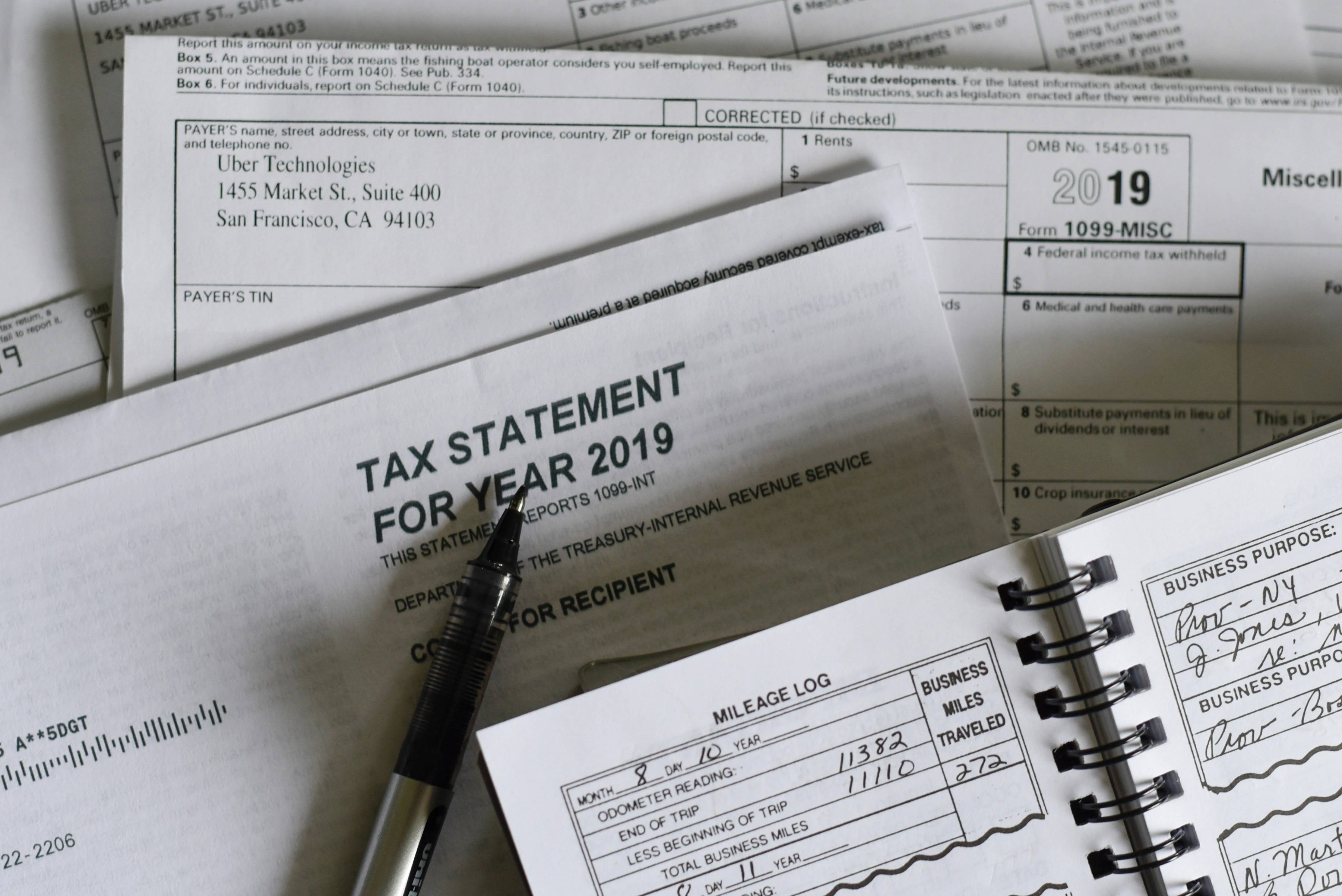
Tax season is live in France right now. Online filing on impots.gouv.fr opened on 9 April 2026, and the first deadlines hit in just over a month — paper returns by 19 May, and online returns staggered from 21 May to 4 June depending on your département. For expats, this is never a routine exercise: beyond the main formulaire 2042, you likely need the 2047 for foreign income, the 3916 for foreign bank accounts (€1,500 fine per missed account), and critical boxes like 1AF/1BF for foreign salary and 8TK for the credit d'impôt that prevents double taxation. First-year filers face the steepest learning curve because the tax office sends no reminder email if you haven't yet created an espace particulier. This guide walks through every stage — who must file, which forms apply, how to navigate impots.gouv.fr screen by screen, and how to avoid the five mistakes that cost expats hundreds of euros every year. If you've been putting this off, now is the week to act.

Read the article

French Tax System for Expats: First Year, Partial Year, and Cross-Border Income Explained
Finance•April 2, 2026

French Tax System for Expats: First Year, Partial Year, and Cross-Border Income Explained

Arriving in France means entering one of Europe's most complex tax systems. Between the prélèvement à la source, the déclaration de revenus, the avis d'imposition, and special rules for partial-year and cross-border income, most expats overpay or miss deductions in their first years. This guide breaks down exactly how French taxation works for newcomers — with the legal references to back it up.

Read the article
Wake Up to a Frozen Bank Account: The 8-Month Expat Trap Nobody Warns You About
Finance•January 7, 2026

Wake Up to a Frozen Bank Account: The 8-Month Expat Trap Nobody Warns You About

You moved 8 months ago. Everything seemed fine. Then this morning: declined card. Blocked transfer. Account closure notice. Nothing dramatic happened yesterday. The problem was building in silence: • Your address change wasn't fully processed • Cross-border transactions triggered internal alerts • Tax and visa data created residency doubts European banks don't warn you. They watch. They wait. Then they act—suddenly. This article shows why thousands of expats lose banking access months after moving, how your residency and tax data are cross-checked right now, and what you can do tonight to prevent a freeze.

Read the article