ExpatAdminHubEuropean expat guide
FR
Menu▾
HomePrivacyCookiesAboutContact
All guidesPreparationHousingFinanceHealthcareWorkFamilyCultureVisas & Residence
ExpatAdminHubEuropean expat guide
HomePrivacyCookiesAboutContact
Categories
All guidesPreparation (checklists, visas, moving)Housing (rentals, utilities, neighborhoods)Finance (banking, taxes, budgeting)Healthcare (insurance, doctors, pharmacies)Work (jobs, contracts, work permits)Family (schools, childcare, family life)Culture (language, customs, integration)Visas & Residence (visa renewals, residence permits, paperwork)
FR

ExpatAdminHub

Practical guides for European expats navigating admin, housing, healthcare, and everyday life abroad.

Navigation

HomeAboutAuthor: Julien MauriceFrance hubSwitzerland hubContactPrivacyTermsSitemap
© 2026 ExpatAdminHub · European expat guide.
FR
  1. Home
  2. Blog
  3. Visas & Residence
  4. The French Civic Exam (2026): Who Must Take It, How to Register and How to Prepare
The French Civic Exam (2026): Who Must Take It, How to Register and How to Prepare
This article is also available in French.
Lire en français →

French residency series

  • WARP card renewal 2026 (UK nationals)
  • Post-Brexit carte de séjour for UK nationals
  • Permit G: the complete guide

The French Civic Exam (2026): Who Must Take It, How to Register and How to Prepare

Published 2 November 2026

Since 1 January 2026, a first multi-year residence card, a first resident card and naturalisation all come with a new condition: passing the examen civique, a 40-question test on France's values, institutions, rights and history. Renewals are not concerned. Here is who has to take it, what the test looks like, how to register and how to prepare, with every point taken from the official texts.

Key facts

  • The exam is required for a first carte de séjour pluriannuelle, a first carte de résident and naturalisation, for applications made from 1 January 2026 (loi n° 2024-42 du 26 janvier 2024; CESEDA L. 413-3, L. 413-7, L. 433-4). Renewals are not concerned.
  • 40 multiple-choice questions in French, on a tablet or computer, in 45 minutes at most. You pass with 32 correct answers (80 %).
  • People aged 65 and over do not take it for a residence card. A health condition or disability can lead to adapted conditions or an exemption, on a medical certificate.
  • Two bodies approved by the Ministry of the Interior run it: France Éducation International and the CCI Paris Île-de-France. The official pages set no national price: each centre shows its own when you book.
  • The pass certificate never expires, and you can retake the exam as often as you need.

Who has to take the civic exam

The exam is a condition for three things, each time for a first application made from 1 January 2026:

  • a first carte de séjour pluriannuelle (multi-year residence card);
  • a first carte de résident (resident card), for example as the spouse of a French national, the parent of a French child, after family reunification, or for a first long-term EU resident card;
  • naturalisation by decree.

Renewals are not concerned: Service-public says it plainly, « Les demandes de renouvellement ne le sont pas. »

Not every multi-year card is concerned. Cards that do not go through the republican integration contract (CIR), beneficiaries of subsidiary protection and stateless people, with their families, do not take it for that card. The Ministry also states that some nationals covered by bilateral agreements are not concerned, without listing them on its page: check your own case with your préfecture before booking.

Nationality by declaration (through marriage, as the parent or sibling of a French national) is not concerned either: only naturalisation by decree is.

Who is exempt

  • Age 65 and over: not required for a multi-year card or a resident card (CESEDA R. 413-15). The French-language requirement is waived as well. The official texts state no age exemption for naturalisation.
  • Health or disability: the test can be adapted, or you can be exempted when an assessment is impossible, on a medical certificate. Separate orders of 30 December 2025 set the procedure for residence cards and for nationality.

If you are unsure, ask the préfecture before you pay for a session.

What the test looks like

The order of 10 October 2025 sets the programme. The exam has three versions, called « mentions »: carte de séjour pluriannuelle, carte de résident and naturalisation. All three follow the same format:

  • 40 questions, each with four answers and one correct one;
  • 28 knowledge questions and 12 situation questions (« mises en situation »), where you choose the right reaction to an everyday case;
  • 45 minutes at most, on a tablet or computer, in French;
  • 32 correct answers to pass.

The themes are the principles and values of the Republic, the institutions, rights and duties, history, geography and culture, and living in French society. The level of difficulty depends on the card: a pass for the resident-card version also counts for the multi-year card.

The civic exam does not replace the French-language requirement, which you prove separately: A2 for a multi-year card, B1 for a resident card, B2 for naturalisation applications made from 1 January 2026.

How to register, and what it costs

You cannot book on the Ministry's own site. You book with one of the two approved bodies:

  • France Éducation International, with its map of exam centres;
  • the CCI Paris Île-de-France.

No official text sets a national price, and the official pages state none: each centre shows its fee when you book. Applicants for naturalisation who live abroad go through an Institut français, an Alliance française or the consulate.

Your certificate is issued digitally, usually within two days, and it has no expiry date. If you fail, you can sit it again whenever you want and as many times as you need. Fraud, on the other hand, means a two-year ban.

How to prepare (free first)

Preparation can be entirely free. The Ministry's formation civique site publishes the official lists of knowledge questions for the multi-year card and the resident card, with revision sheets by theme. It also warns that paid sites claiming to be official are not run by the Ministry.

Two free pages in English by Thibaud Lepan (Éditions Au Texte) are worth a look. The registration guide explains booking, exam day and the exemptions, quoting the official page for each point. The official questions answered in English take one question per page.

If you want a structured guide on top of that, the same author sells one in English and in French. Its situation questions are practice scenarios written by the author, based on the official themes: the Ministry does not publish the situation questions, so no guide can reproduce them. Get the English guide, or the French version. The code EXPATADMINHUB takes 10 % off both.

Disclosure: these two links are affiliate links. If you buy through them, ExpatAdminHub receives a commission, at no extra cost to you. The free resources above are enough to pass, and the guide is a convenience, not a requirement.
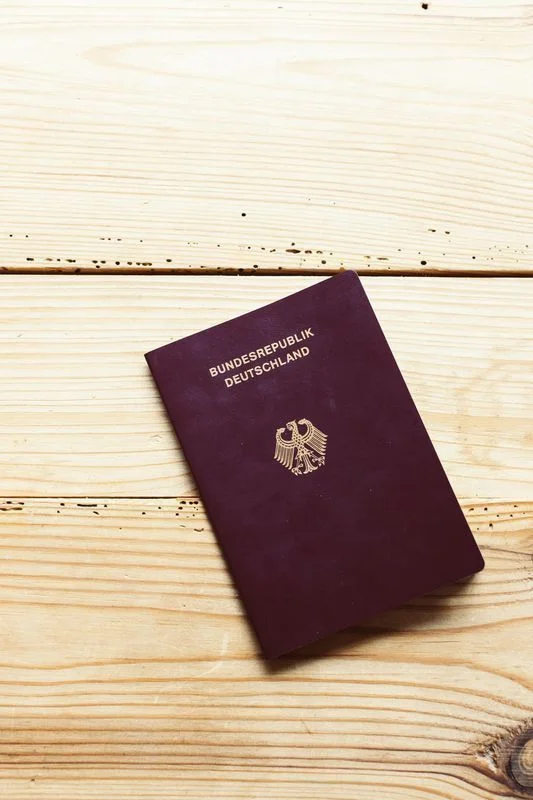

After the exam: the residence permit itself

Passing the exam is one condition among several. The application for the card, with its documents, deadlines and the préfecture's own steps, is the real next step. AdminLanding, the platform behind ExpatAdminHub, explains French administrative procedures in English and helps you keep track of the dates that matter.

Frequently Asked Questions

Do I need the civic exam to renew my residence card?

No. The exam is required for a first multi-year card, a first resident card and naturalisation. Renewals are not concerned.

How many questions must I get right?

32 out of 40, in 45 minutes at most. The test has 28 knowledge questions and 12 situation questions.

How much does the civic exam cost?

No national price is set by the official texts. Each approved centre shows its own fee when you book with France Éducation International or the CCI Paris Île-de-France.

Does the certificate expire, and can I retake the exam?

The certificate has no expiry date, and you can retake the exam whenever you want, as many times as you need.

I am over 65. Do I have to take it?

Not for a multi-year card or a resident card: people aged 65 and over are exempt, and the language requirement is waived too. The official texts state no such exemption for naturalisation.

Stay updated

For more practical insights on this topic, explore our related articles:

  • Renewing Your Post-Brexit WARP Carte de Séjour in France: The 2026 Guide for UK Nationals
  • Post-Brexit Carte de Séjour: Complete Step-by-Step Guide for UK Nationals in France
  • Why Administrative Systems Never Adapt to Expat Life — Even When You Wait
  • What No One Tells You About European Visas — And Why Most Expats Misunderstand Them

Tool by AdminLanding

25+ French admin sites, explained in English

Guide: Démarches en France helps you fill Ameli, CAF, impots.gouv, France Travail, ANTS forms field-by-field. Procedure cards, chat support, bilingual EN/FR. Free Chrome extension; AI features use 5 free credits/month, top-up packs available.

Try Guide: Démarches en France

Conclusion: The civic exam is a short test with clear rules: 40 questions, 32 to pass, no expiry and unlimited retakes. Start with the Ministry's free question lists, check whether your card is concerned, then book with an approved centre. Sources: loi n° 2024-42 du 26 janvier 2024; CESEDA L. 413-3, L. 413-7, L. 433-4, R. 413-15; arrêté du 10 octobre 2025; Service-public F39530 (checked 10/02/2026) and F39426; formation-civique.interieur.gouv.fr. Read on 02/11/2026.

Tool by AdminLanding

25+ French admin sites, explained in English

Guide: Démarches en France helps you fill Ameli, CAF, impots.gouv, France Travail, ANTS forms field-by-field. Procedure cards, chat support, bilingual EN/FR. Free Chrome extension; AI features use 5 free credits/month, top-up packs available.

Try Guide: Démarches en France→

About the author:

Julien Maurice is the founder of AdminLanding and writes the editorial guides on ExpatAdminHub covering European expat life, France-Switzerland cross-border work, and French administrative procedures. Contact: [email protected]

Related posts

Renewing Your Post-Brexit WARP Carte de Séjour in France: The 2026 Guide for UK Nationals
Visas & Residence•8 June 2026

Renewing Your Post-Brexit WARP Carte de Séjour in France: The 2026 Guide for UK Nationals

To renew your Brexit WARP carte de séjour in France, apply through your préfecture — online via the ANEF portal where available — starting about two months before it expires. Renewal is free, with no language test and no income requirement. A récépissé keeps you legal while you wait. Most renewals now produce a 10-year card.

Read the article
Post-Brexit Carte de Séjour: Complete Step-by-Step Guide for UK Nationals in France
Visas & Residence•30 March 2026

Post-Brexit Carte de Séjour: Complete Step-by-Step Guide for UK Nationals in France

Since Brexit took full effect on 1 January 2021, UK nationals are no longer EU citizens and need a carte de séjour (residence permit) to live in France. Whether you were already resident before Brexit or are arriving now, this guide covers every step — from eligibility to the préfecture appointment.

Read the article
Why Administrative Systems Never Adapt to Expat Life — Even When You Wait
Visas & Residence•14 January 2026

Why Administrative Systems Never Adapt to Expat Life — Even When You Wait

One of the most persistent beliefs among expats is that time will solve administrative problems. That if you wait long enough, systems will update, adapt, or correct themselves. In reality, waiting often makes things worse. Administrative systems do not observe your life and adjust. They apply static logic to declared data. This article explains why systems never adapt automatically to expat life, why waiting is misinterpreted as confirmation, and why clarity only comes when alignment is made explicit.

Read the article